

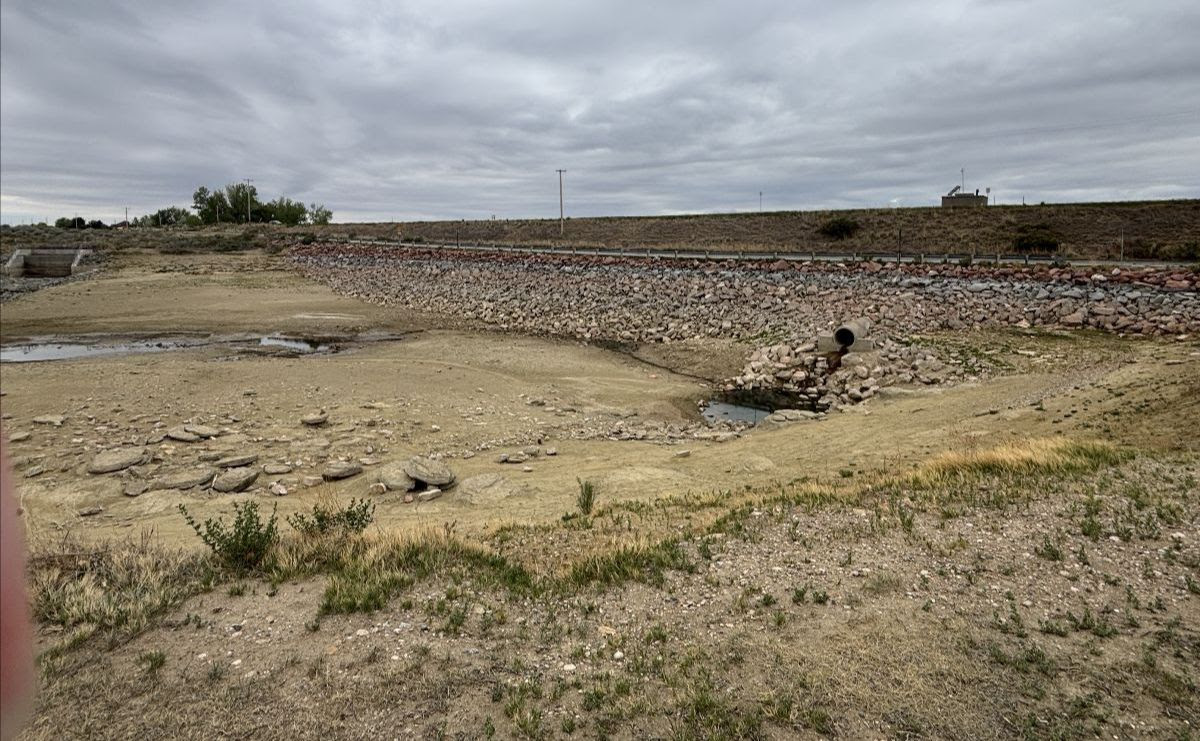
Colorado State University researchers document record-breaking temperatures, exceptionally low snowpack, and persistent drought conditions in their annual statewide climate report.
by North Forty News Staff | NorthFortyNews.com
FORT COLLINS, Colo. — Colorado experienced its warmest water year on record in 2026, with temperatures exceeding previous records by a substantial margin and snowpack falling to its lowest recorded levels, according to a new report from Colorado State University researchers.
The findings are part of CSU’s annual Water Year report, released October 20 by researchers with the Colorado Climate Center and the university’s Department of Atmospheric Science.
The report examines conditions from October 1, 2025, through September 30, 2026, tracking precipitation, mountain snowpack, streamflow, and other climate indicators that influence water availability throughout the state.
In Northern Colorado, where mountain snowmelt supplies rivers, reservoirs, agricultural operations, and municipal water systems, the findings underscore the importance of understanding how unusually warm, dry conditions affect regional water resources.
Record Heat and Historically Low Snowpack
Researchers identified two particularly significant findings: Colorado experienced its warmest water year on record by a substantial margin, and statewide snowpack reached its lowest recorded levels.

Mountain snowpack serves as a critical natural reservoir, storing winter precipitation that gradually melts during spring and summer. That runoff replenishes waterways and reservoirs that serve communities across the Front Range and Eastern Plains.
When snowpack is unusually low, less stored water may be available for runoff, potentially creating challenges for agricultural producers, water utilities, and ecosystems that depend on seasonal flows.
Higher temperatures can compound those challenges by increasing evaporation and moisture loss from soils and vegetation.
The report also examines ongoing drought conditions and longer-term climate trends, providing context for how the 2026 water year compares with historical patterns.
Implications for Northern Colorado
Water conditions in Colorado’s mountains directly affect communities throughout Northern Colorado.
The Cache la Poudre, Big Thompson, and South Platte river systems support municipal water supplies, irrigation, recreation, and wildlife habitat across the region.
Reduced mountain snowpack and extended periods of unusually warm weather can affect when and how much water moves through these systems.

The report’s findings are particularly relevant as communities continue evaluating long-term water storage, conservation, and infrastructure needs amid changing environmental conditions.
However, the statewide records do not necessarily mean every watershed experienced identical conditions. Local precipitation, reservoir storage, and runoff patterns can vary considerably.
A Year of Weather Extremes
Beyond temperature and snowpack records, the CSU report documents notable weather events across Colorado during the 12-month period.
Researchers examined wildfires, severe storms, destructive flooding, and other significant events to provide a broader picture of the state’s climate conditions.
The annual assessment follows the water year, which begins October 1 rather than January 1. This reporting period allows scientists and water managers to evaluate winter precipitation, spring snowmelt, and summer water availability within a single annual cycle.
The Colorado Climate Center produces the report to help researchers, public agencies, water managers, and residents better understand Colorado’s changing climate and water resources.
CSU Researchers Provide Statewide Perspective
Allie Mazurek, an engagement climatologist with the Colorado Climate Center, and Russ Schumacher, Colorado’s state climatologist and director of the center, contributed to the report.

Schumacher is also a professor in CSU’s Department of Atmospheric Science.
Their research provides a statewide assessment of the past water year and places recent extremes in the context of longer-term climate records.
As Colorado enters the 2027 water year, the report establishes an important baseline for evaluating future precipitation, mountain snowpack, and water supply conditions.
For Northern Colorado residents, farmers, and water managers, the findings reinforce the importance of tracking winter snowfall and spring runoff in the months ahead.
Source: Colorado State University (SOURCE), Colorado Climate Center and Department of Atmospheric Science, 2026 Water Year report announcement, October 20, 2026.