

Anne Manning | Colorado State University, The SOURCE
While climate change is taking effect everywhere on Earth, the Arctic Circle is feeling those effects most of all, in the form of glacial melt, permafrost thaw, and sea ice decline.

Key players in climate change include the clouds that cover the Earth’s surface and the microscopic, airborne aerosols called ice nucleating particles that seed the formation of ice in those clouds. This dance of ice nucleation, cloud cover, and heat all have major roles in climate. But those all-important ice-creating aerosols, which can be mineral dust, microbes, or sea spray, have scarcely been studied in the Arctic – where they need to be studied most of all – because little is known about their effects there, and not many scientists venture that far north.
Colorado State University scientists did, though. In 2019, an intrepid team including atmospheric research scientist Jessie Creamean boarded a ship, sailed north, gathered thousands of air, seawater, sea ice, snow, and meltwater samples, and brought home the physical evidence needed to determine exactly how ice nucleation and clouds over the Arctic Ocean ebb and flow over time.
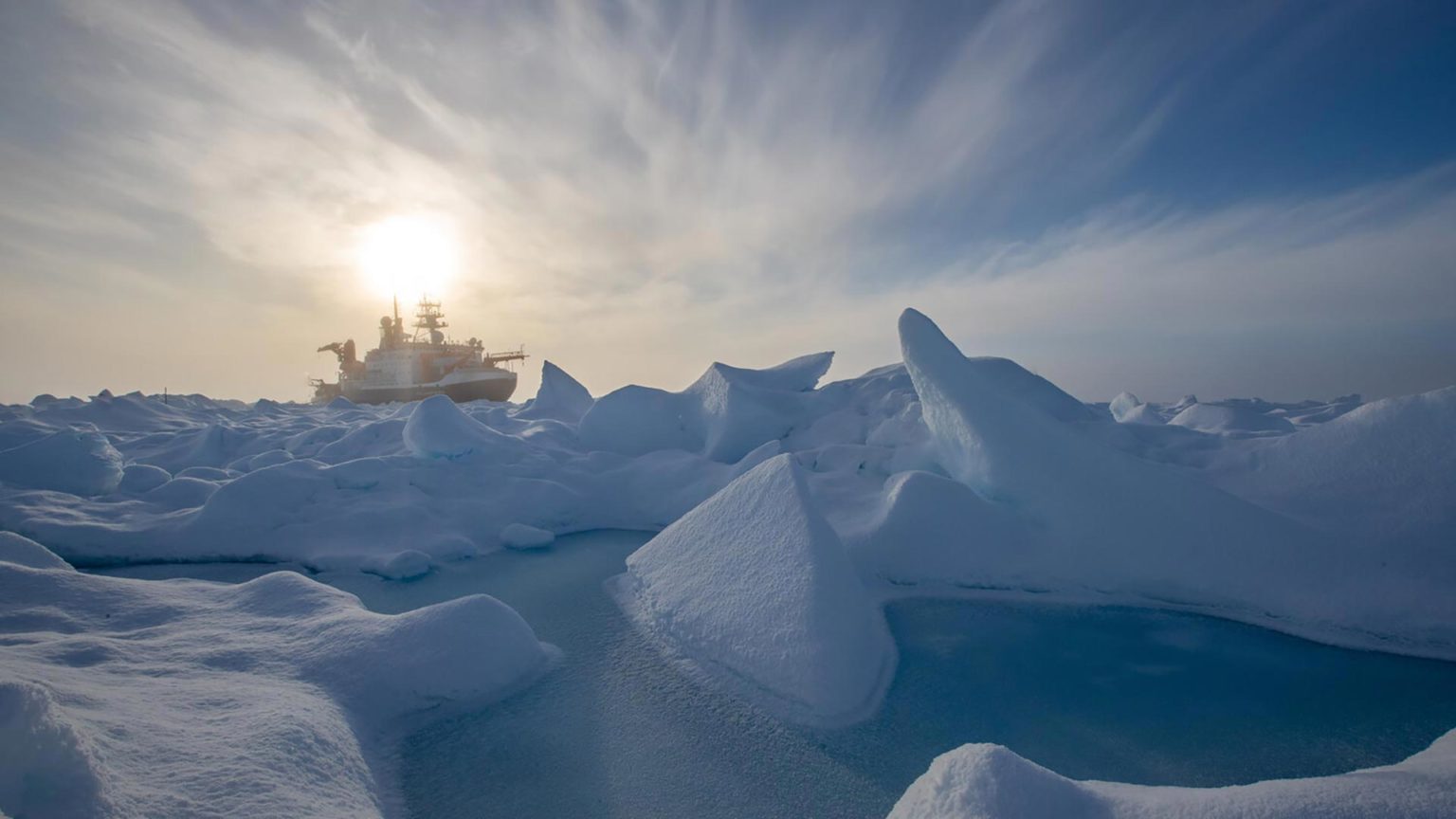
Creamean and the team took to the frozen Arctic aboard a German icebreaking ship called the Polarstern as part of the MOSAiC expedition. The CSU researchers’ goal was to report never-before-seen observations of ice nucleating particles in the central Arctic, away from land-based locations that are influenced by terrestrial sources of aerosols. MOSAiC was a large, international expedition that hosted Arctic-focused scientific research projects from all over the world.

In an open-access paper published in Nature Communications, Creamean and colleagues report their direct observations of size-resolved ice nucleating particles in the central Arctic, spanning the entire sea ice growth and decline cycle. Their results show a strong seasonality of these particles, with lower concentrations in the winter and spring, and enhanced concentrations during summer melt from local biology. No one has ever directly observed these cycles before in this region.
“It is important to know the natural background of these ice nucleating particles before we can really assess how changes due to climate are affecting the populations of these aerosols,” explained Creamean, a veteran Arctic Ocean-goer whose research has taken her several times to the northernmost reaches of the planet. The team who worked on the analysis of samples collected during the MOSAiC expedition and wrote the paper included CSU atmospheric scientists Kevin Barry, Tom Hill, and Paul DeMott.
Understanding such ice nucleating particles is fundamental to understanding the effects of climate change on the planet due to their impacts on clouds. Adding ice to a cloud changes how it interacts with light and heat from the sun, and heat that bounces back from Earth’s surface. And ice is important for starting precipitation.
“It’s an important process we just don’t have a good understanding of, especially in the Arctic,” Creamean said. “The models just don’t get it right when it comes to estimating these ice nucleating particles or their cloud effects. So, this was a big observation – to have a look at where these things are coming from, and how they change over the course of a year.”