

by North Forty News Staff | NorthFortyNews.com
Research conducted along the Front Range and across the United States is helping prepare a NASA satellite mission designed to better understand severe storms.
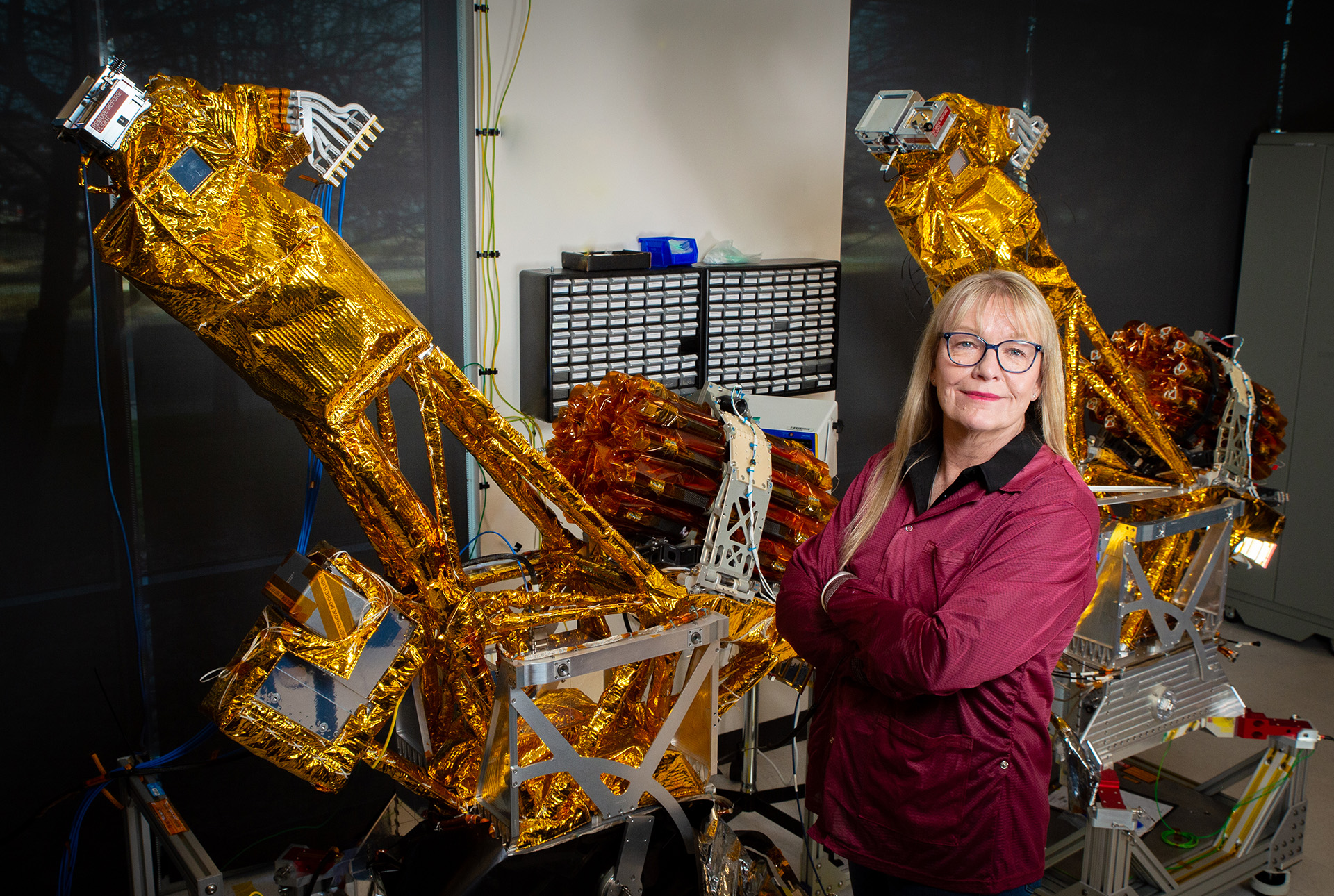
Scientists at Colorado State University are leading field campaigns across the country to prepare for NASA’s upcoming Investigation of Convective Updrafts mission, known as INCUS. The satellite project aims to improve understanding of how powerful storms form and evolve—research with potential impacts for forecasting severe weather that affects communities across Northern Colorado.

Researchers with CSU’s Department of Atmospheric Science are testing radar systems, tracking tools, and forecasting methods in Colorado and other states as part of the mission’s calibration and validation work ahead of a planned satellite launch no earlier than 2027.
The INCUS mission will use three small satellites flying in sequence to measure vertical air movement inside storms from space. That upward motion—known as convective mass flux—is a key driver behind heavy rain, damaging winds, and other severe weather events.

By studying how air and water move upward through storms, scientists hope to better understand why some storms intensify while others weaken. The project could eventually improve weather forecasting models and help researchers better predict storm strength and behavior.
Several recent field campaigns included work along Colorado’s Front Range, where researchers deployed advanced radar systems, weather balloons, and other instruments to track storms in real time. CSU scientists also collaborated with teams in Oklahoma and Alabama to gather data across different environments.

One of the primary tools used in Colorado was the CSU-CHIVO radar system, which provides detailed information about the internal structure of storms. Researchers combined that system with automated storm-tracking technology designed to quickly detect and follow developing weather systems.
The groundwork being done now will help scientists compare ground-based radar observations with the satellite measurements once INCUS launches. According to CSU researchers, building a strong reference database is essential to ensure the mission’s data is accurate and useful to the global scientific community.
Beyond its scientific value, the research also contributes to an improved understanding of severe weather patterns that regularly affect Colorado and the broader region. From hailstorms along the Front Range to tornado outbreaks across the Plains, better storm measurements could ultimately improve forecasts and warning systems.
Make North Forty News part of your morning. Get Northern Colorado’s top stories, weather, and events every day at 5 a.m. in our Daily Update.
Attribution: Colorado State University SOURCE news release.