

By Shannon Moreau | Fort Collins Nursery

When speaking of pollinators, most people immediately think of butterflies and honey bees, but in reality, there are so many more pollinators filling roles and seeking pollen in our ecosystem. The success of native bees, moths, wasps, and other pollinating insects depends on the food provided by early spring bloomers, and we can help them thrive by planting with this in mind. Rather than selecting plants focused on feeding just one species of pollinator, cast a wide net by planting a diverse array of plants to ensure your garden benefits all the beneficial insects in your landscape.


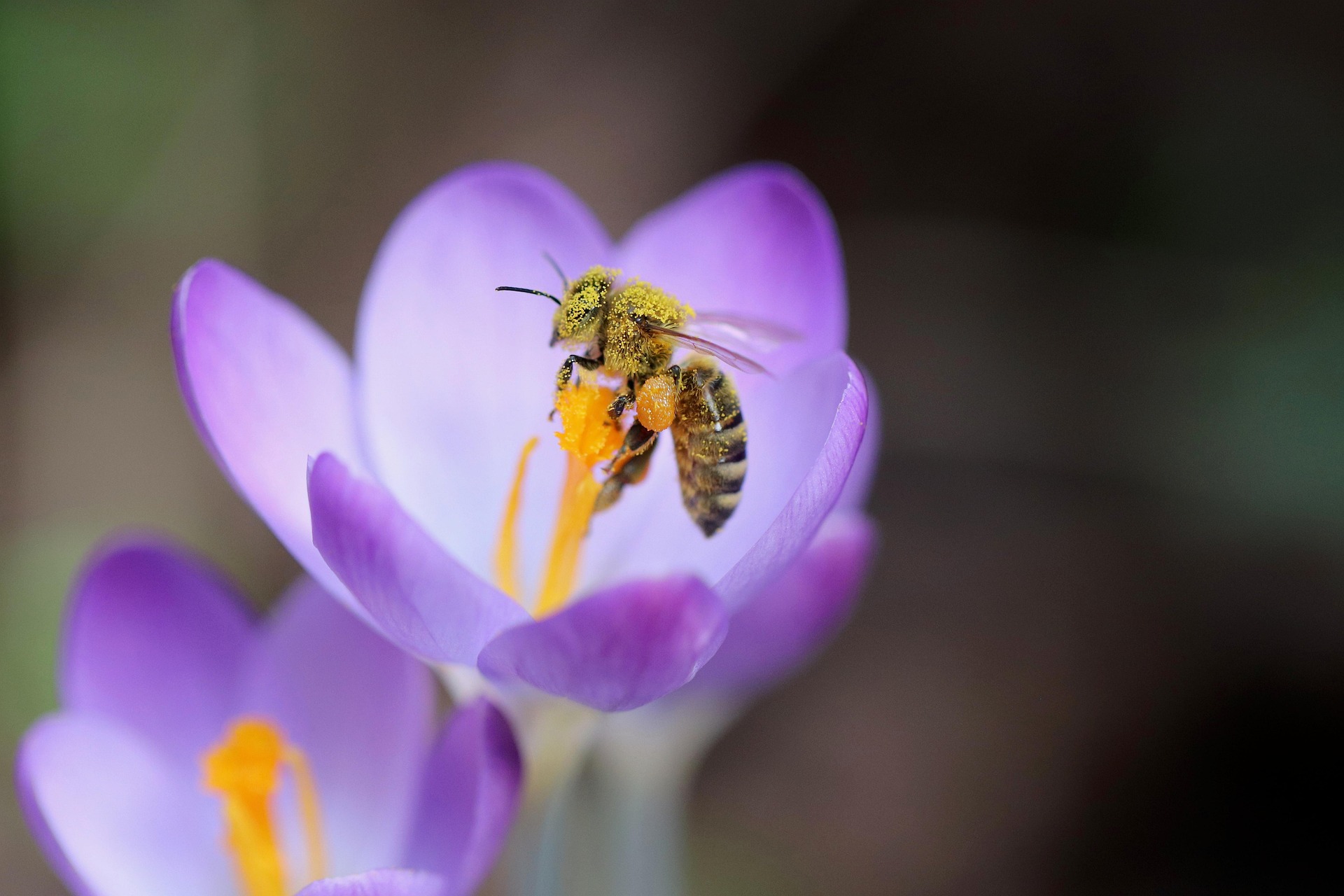
Cold-hardy bulbs are a favorite option for many gardeners, as they are often among the first flowers in spring. A few of the earliest bulbs include spring crocus, snowdrops, and dwarf daffodils, which are an excellent pollen source for our first pollinators to take flight. Small but mighty, these selections must be planted in the fall so they receive an adequate chilling period and can root lightly before winter. Each is an excellent option for any perennial landscape or rock garden and looks lovely when planted en masse.

Incorporating frost-tolerant annuals like snapdragons, pansies, sweet alyssum, and stock into your containers or the edges of perennial beds provides color and ongoing blooms for your early pollinators to feast on. Snapdragons and sweet alyssum continue to bloom throughout the late spring and summer, but stock and pansies prefer the cooler temperatures of early spring. To promote continuous flowering, deadhead these annuals after each flower fades.

Herbaceous perennials such as pasque flower, dwarf iris, and perennial alyssum are dependable garden staples. While Basket of Gold perennial alyssum (Aurinia saxatilis) is the first to come to mind, Golden Spring perennial alyssum (Alyssum wulfenianum ‘Golden Spring’ ) is a lovely low-growing option that stays evergreen during the winter months. Fortunately, each of these will be less than 12” tall, making it easy to plant them along edges and tucked into narrow locations. If you need to bridge the gap of mid-late spring with another herbaceous perennial, penstemons are an excellent choice. I am especially fond of the native Rocky Mountain Penstemon (Penstemon strictus).

If your landscape needs more structure, several early-season blooming shrubs fit the bill nicely. Selections such as Pussy Willow (Salix discolor), Western Sandcherry (Prunus besseyi), and Texas Scarlet Quince (Chaenomeles ‘Texas Scarlet’) are reliable selections in our climate. Pussy Willow is ideal for consistently moist locations, and its unique blooms make it a showstopper in the spring. If you love the white flower of the Western Sandcherry but prefer a smaller package, varieties like ‘Pawnee Buttes’ and ‘Blonde Bessie’ are excellent alternatives.
While this list is a nice place to start, there are a plethora of other options and varieties within species that will offer your local pollinators a feast in the early spring. For further inspiration, go for regular walks through your neighborhood throughout March and April to see what other interesting options are blossoming and which pollinators are visiting the flowers.