
By North Forty News Staff | NorthFortyNews.com
New partnership provides real-time atmospheric data to improve highway safety, storm response, and student research across Colorado.
FORT COLLINS, Colo. – A new partnership between the Colorado Department of Transportation (CDOT) and Colorado State University is taking weather forecasting to new heights—literally.
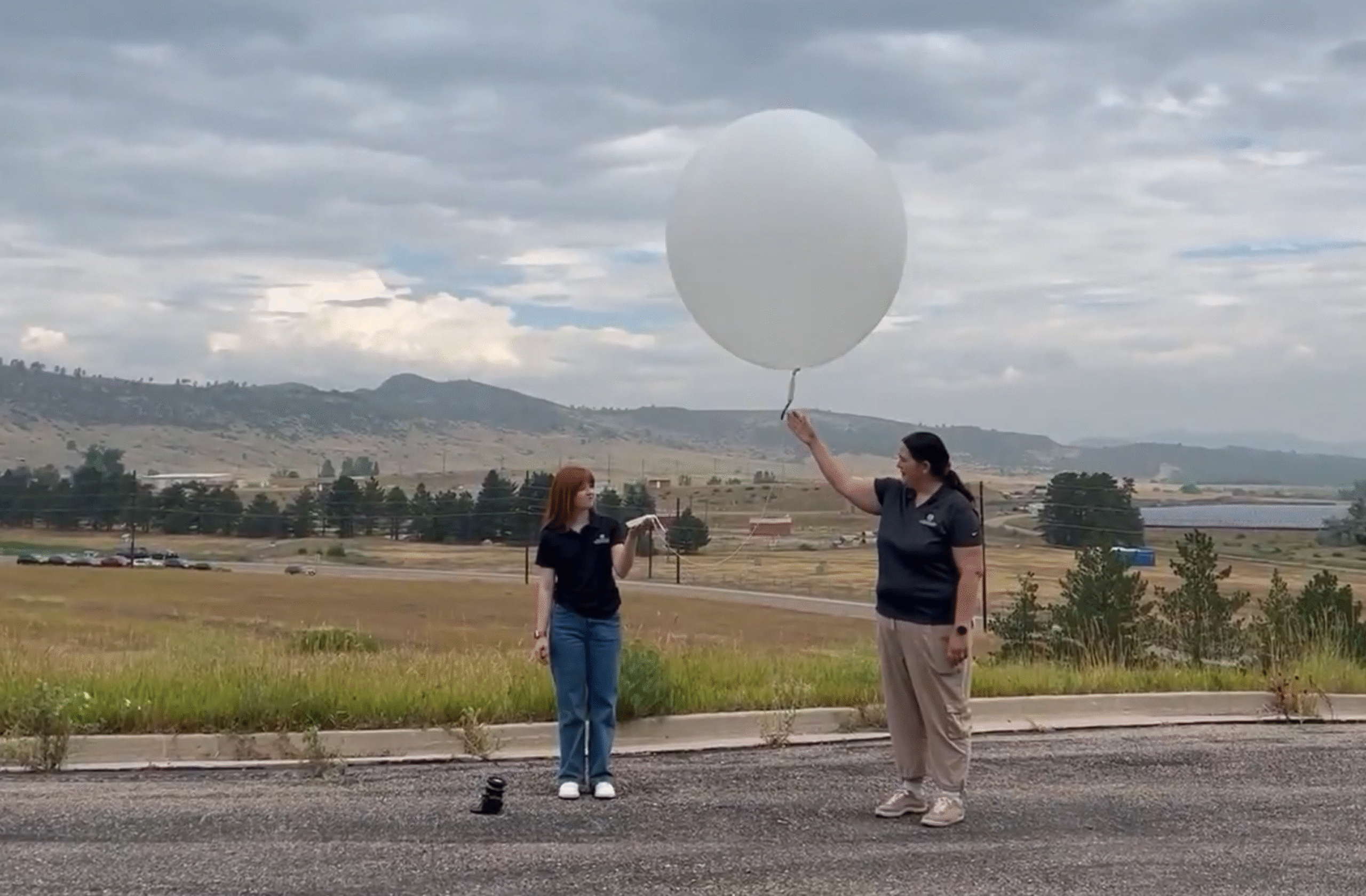
On July 23, CDOT meteorologists and CSU graduate students launched a weather balloon near Horsetooth Reservoir to collect atmospheric data that will improve year-round highway operations across Colorado. The launch fills a gap in upper-air weather observations, giving forecasters more detailed information to support road maintenance, traveler alerts, and emergency response.
The balloon measures temperature, humidity, wind speed, air pressure, and other atmospheric conditions from the ground to jet-stream levels. That information helps CDOT predict changing weather more accurately, allowing maintenance crews to better time road treatments, deploy equipment, and prepare for hazardous travel conditions.
“Understanding what is happening in the atmosphere above Colorado’s roads gives our crews a critical edge,” said Michael Chapman, CDOT’s winter operations program manager and chief meteorologist. “This data helps us get ahead of storms in winter and anticipate severe weather in the summer, so we can make smarter decisions about when and where to deploy resources and give travelers better information before conditions change.”
The timing of the first launch coincides with Colorado’s summer monsoon season, when heavy rainfall can quickly trigger flooding along mountain highways and burn-scar areas. CDOT says the additional atmospheric observations will improve forecasts and allow crews to position resources before dangerous conditions develop.
For CSU, the launches also create valuable research opportunities.
“We are excited for this partnership that both benefits CDOT operations and also provides us with useful observations for research and forecasting,” said Research Scientist Brenda Dolan. “The spatial and temporal coverage of upper-air soundings east of the Rockies is coarse, so observations such as these special soundings can improve short-term forecasting.”
The weather data collected will also be shared with the National Weather Service and other forecasting partners, expanding its value beyond transportation.
CDOT says the collaboration reflects its continued investment in science, technology, and data-driven decision-making to keep Colorado’s roads safer in every season.
More information about Colorado travel conditions is available at https://www.cotrip.org.
Source: Colorado Department of Transportation <div style=”border:1px solid #d9d9d9;border-left:5px solid #4a7c59;background:#f8fbf8;padding:18px;margin:24px 0;”> <h3 style=”margin:0 0 10px 0;font-family:Arial,sans-serif;color:#2c5e3f;”>Support Local Journalism</h3> <p style=”margin:0;font-family:Arial,sans-serif;font-size:15px;line-height:1.6;color:#333;”> North Forty News is committed to providing trusted, independent reporting across Northern Colorado. Help sustain local journalism by becoming a supporting member today. </p> <p style=”margin:16px 0 0 0;”> <a href=”https://northfortynews.com/trial” style=”background:#4a7c59;color:#fff;padding:10px 18px;text-decoration:none;border-radius:4px;font-family:Arial,sans-serif;”>Become a Member</a> </p> </div>