

by North Forty News Staff | NorthFortyNews.com
New partnership with CSU aims to calm gusts and improve daily life across Northern Colorado
FORT COLLINS, Colo. — After decades of gusty spring days and red flag warnings, Fort Collins officials announced Tuesday the launch of a first-of-its-kind pilot program designed to reduce wind along the Front Range.
The initiative, developed in partnership with researchers at Colorado State University, will test a network of “atmospheric stabilization towers” placed west of the city near the foothills. The goal: to disrupt and redistribute high-speed wind patterns before they reach populated areas.
City officials say the program is a response to growing concerns about wildfire risk, property damage, and quality of life during Northern Colorado’s windiest months.

“Wind has been one of the most consistent challenges for residents, especially in spring,” said a city spokesperson. “This pilot allows us to explore whether emerging technology can make a measurable difference.”
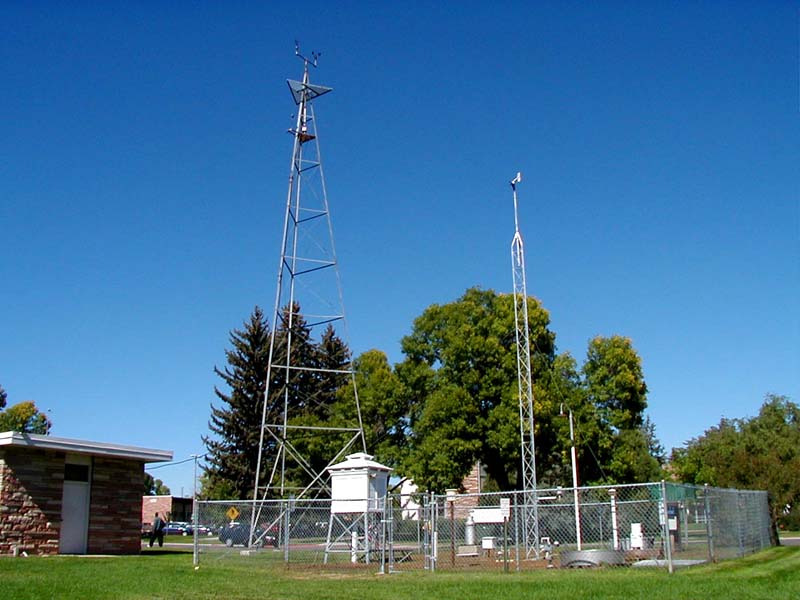
The towers—described as slender vertical structures equipped with directional vanes and low-frequency vibration emitters—will be installed in a test corridor stretching from Horsetooth Reservoir north toward Laporte. Researchers say the system works by subtly altering pressure gradients that contribute to high gust speeds.
According to CSU atmospheric scientists involved in the project, early modeling suggests the technology could reduce peak wind gusts by up to 30 percent in targeted zones.
Residents in select neighborhoods will be enrolled in a voluntary “calm zone” program, where wind speeds are expected to be noticeably lower during high-wind events. Participants will be asked to provide feedback on outdoor conditions, noise levels, and overall quality of life.
Local businesses are already expressing interest. Patio-heavy restaurants, construction firms, and event organizers have all cited wind as a major operational challenge.

“If they can actually take the edge off those 50-mile-per-hour days, that changes everything for us,” said one Old Town restaurant owner.
The city emphasized that the program is still in its early testing phase and will be closely monitored throughout the spring season. Data collected will determine whether the system could be expanded across other parts of Northern Colorado.
Not everyone is convinced. Some residents have raised questions about potential unintended effects, including impacts on weather patterns east of the city.
Officials acknowledged those concerns and said environmental monitoring is built into the pilot.
“We’re not eliminating wind,” the spokesperson said. “We’re simply trying to make it a little more manageable.”

The pilot program is expected to run through May, with preliminary results released in early summer.
The proposal has also drawn attention from neighboring states. Officials in Wyoming have reportedly requested additional information on the project, citing concerns that reducing wind along the Front Range could have “downstream atmospheric impacts” across state lines. One official added that Wyoming residents “have grown accustomed to a reliable supply of wind” and would be watching the Fort Collins pilot very closely.
North Forty News gets one day per year to “make up” one story in your local news—and today is the day. We wish reducing the wind was real, but if you’ve read this far, you know now wind reduction isn’t real. Not Yet! April Fool’s!
If you’d like REAL NEWS every morning at 5 am, we have you covered. The Daily Update is made just for Northern Colorado by humans, with the intention of connecting Northern Colorado communities.