

By Chelsea McLean, Horticulturist | The Gardens on Spring Creek

Fall might be my favorite time in the garden. The temperature settles into that sweet spot between scorching and frigid, while fall blooms shine in full glory as spring and summer plants fade.

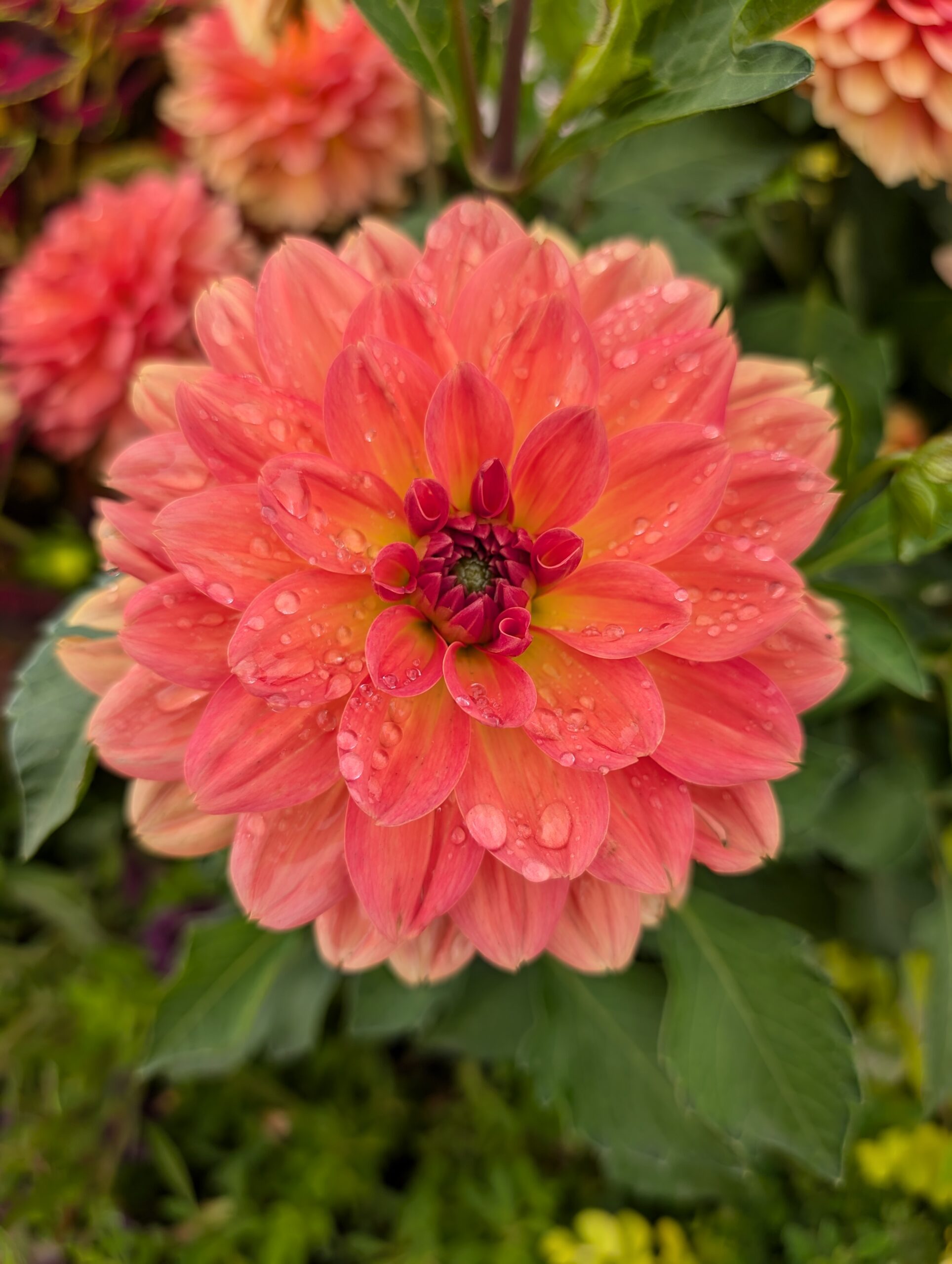
As summer winds down at The Gardens on Spring Creek, dahlias are among the flowers that draw the most attention. And for good reason. Native to Central America, the Dahlia genus is a member of the Asteraceae family, comprising 42 species. With over 57,000 registered cultivars, the sheer variety of forms, flower structure, stem morphology, and colors is overwhelming—clear evidence of our fondness for these beautiful plants.
In warmer regions, dahlias overwinter in place with a tuberous root system that provides ample storehouses for sugars and water. However, moving north, the conditions become less favorable to overwintering in the ground. Many gardeners treat them like annuals —enjoying them for a season before adding them to the compost bin. But with a bit of knowledge and a dose of confidence, you can enjoy that hard-to-find cultivar for years to come.
Get started by watching your plants progress through the growing season. The ones with the healthiest foliage, strongest blooms, and most overall vigor are likely to be the ones with the best tubers. Once a destroying frost hits, cut the entire plant back, leaving a few inches of stalk. Carefully loosen the soil with a digging fork in all directions about a foot out from the remaining stalk. Work the fork under the tuber system and lift the entire clump out.
Clear away the soil. A blunt-ended chopstick or pencil will allow you to work the debris out of the tight spaces without piercing the tubers. Once you have a handle on the large chunks of soil, a pressurized hose will blast off the more persistent remnants. Taking the time to clean the tubers will reduce the chances of pests and pathogens and will also help you locate the eyes.


Using a pair of sharpened and sterilized pruners, snip each tuber away from the main clump at the neck and remove the long feeder roots. Discard any material with soft spots, discoloration, or evidence of insects. Leave them in a shady location to dry for 24 hours before packing them away.
The key to storing dahlia tubers is threefold: temperature, humidity, and medium. Coarse vermiculite tends to be growers’ preference for moisture management and airflow, though newspaper and wood shavings tend to be more readily available for the homeowner. Place the divided tubers in a bag or container of your medium of choice and leave them somewhere the temperature hovers between 40 and 45 degrees. Think basement, crawl space, or temperature-regulated cooler.
Check in weekly towards the beginning of the winter to observe the status of the tubers. If they start to shrivel, increase the humidity by moving them to a different environment or trying different packing media. If you notice rot, punch holes in the bag or vent the lid of the container to reduce humidity. If they start to sprout, move them somewhere colder. Be careful not to let them freeze. Once you find the sweet spot where they can sit dormant in a steady state, note the factors so you can replicate them in future winters (here’s a quick plug for a good garden journal!). Do keep in mind that different cultivars may have different requirements. No matter how dialed in your process becomes, you may always lose a few tubers.
Once spring rolls around, you will start to see the eyes swell. Move your tubers to a warmer spot to allow the new growth to continue. Once you have a few promising shoots, you can pot them up or plant them directly into the ground, depending on your planting plan.
Then give yourself a pat on the back—you’ve successfully ushered your dahlias into a new season! Keeping this skill in your back pocket can significantly expand your home collection and earn you a gold star for “Neighbor of the Year.” Many a dahlia obsession began with a gifted tuber from a friend’s overflowing garden. And with 56,999 more cultivars to try, bring on the winter catalogues!