

by North Forty News Staff | NorthFortyNews.com
Experts say year-round sunscreen use is critical in Northern Colorado’s high-altitude environment
Northern Colorado’s sunny climate and high elevation make sunscreen a daily essential, not just a summer habit. Health experts say consistent skin protection is one of the most effective ways residents can reduce their risk of skin cancer and long-term skin damage.
With up to 300 days of sunshine each year, Colorado offers abundant opportunities for outdoor recreation—but also increased exposure to ultraviolet (UV) radiation. According to specialists with UCHealth, the state’s elevation significantly intensifies the sun’s rays, contributing to one of the highest skin cancer rates per capita in the country.

UV radiation—both UVA and UVB—can damage skin cells, leading to premature aging and cancer. UVA rays penetrate deeper into the skin and are present year-round, even on cloudy days, while UVB rays primarily affect the surface and are responsible for sunburn.
In mountain communities like Estes Park and across Larimer County, elevation plays a measurable role. Experts note UV intensity increases by more than 5% for every 1,000 feet in altitude. That means Northern Colorado residents may experience UV exposure more than 30% stronger than at sea level.
Snow and water can further amplify that exposure. Reflective surfaces can bounce UV rays back onto the skin, effectively doubling the impact—an important consideration for hikers, skiers, anglers, and anyone spending time outdoors.
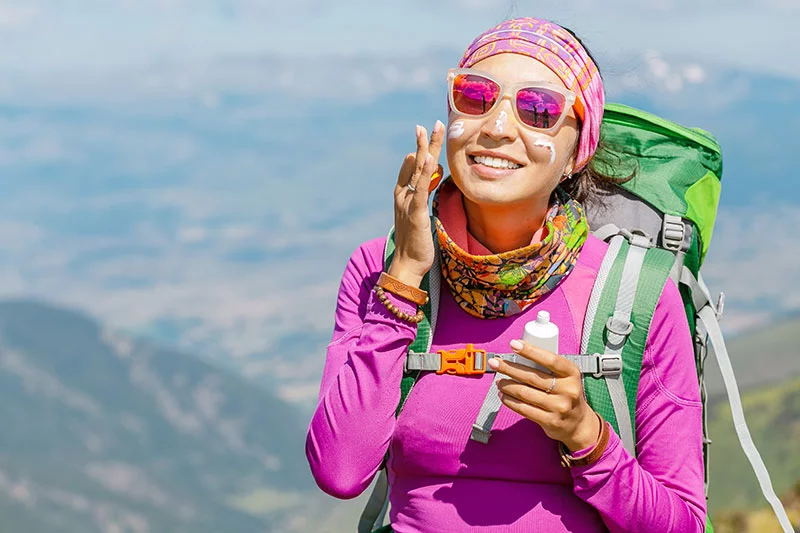
Health professionals recommend applying sunscreen at least 15 minutes before going outside and reapplying every two hours, especially during extended outdoor activity. A broad-spectrum sunscreen with SPF 30 or higher is recommended, along with protective measures such as hats, sunglasses, and UPF-rated clothing.

“Consistent use is what matters most,” dermatology experts say. “The best sunscreen is the one you’ll actually use every day.”
They also encourage residents to monitor their skin for changes, including new or evolving spots, and to seek medical evaluation if anything appears unusual or does not heal.
Early detection remains key. When caught early, melanoma—the most serious form of skin cancer—has a five-year survival rate of about 99 percent.
Even with precautions, sunburns can happen. Experts recommend moisturizing the affected area, staying out of the sun, and using cool compresses or aloe to reduce discomfort. Severe burns, especially those involving blistering, should be evaluated by a healthcare provider.
For Northern Colorado residents, the message is clear: sun protection is not seasonal. Whether it’s a cloudy spring day in Fort Collins or a winter hike near Rocky Mountain National Park, daily sunscreen use is one of the simplest ways to protect long-term health.
Make North Forty News part of your morning. Get Northern Colorado’s top stories, weather, and events every day at 5 a.m. in our Daily Update.
Attribution: Content adapted from reporting by UCHealth.