
by North Forty News Staff | NorthFortyNews.com
Colorado Parks and Wildlife and the U.S. Forest Service launch new conservation effort in Weld County with more than 18,000 northern redbelly dace released on federal land
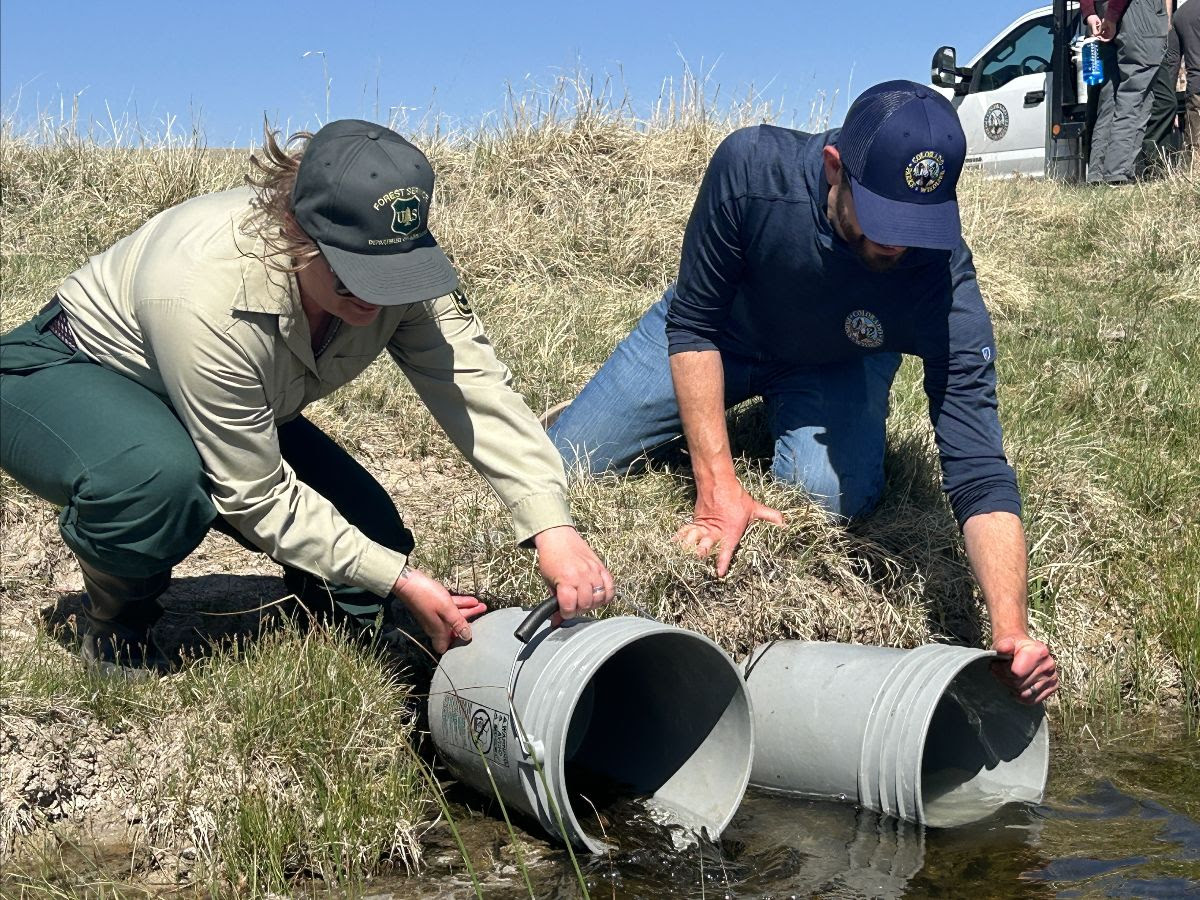
WELD COUNTY, Colo. — Colorado Parks and Wildlife (CPW), working alongside the U.S. Forest Service, has completed a historic conservation milestone by stocking more than 18,000 state-endangered northern redbelly dace into a groundwater-fed creek on the Pawnee National Grassland.
The May 13 release marks the first time the species has been stocked on USDA Forest Service-managed land in Colorado and the first northern redbelly dace stocking on federal land in nearly 20 years.


The northern redbelly dace, a small native minnow that grows to just two to three inches long, is listed as a Tier 1 species of greatest conservation need in Colorado. The fish is known for the bright red stripe that males develop during the breeding season, which serves as an important indicator of water quality and ecosystem health.
According to CPW aquatic biologist Matt Haworth, the species provides valuable insight into the condition of aquatic habitats.

“The northern redbelly dace are considered an indicator species for biologists, like a canary in a coal mine,” Haworth said. “If we observe their presence in a body of water, we learn a lot about that environment.”
The fish require cool, slow-moving water with abundant vegetation and little disturbance from pollution or non-native predatory fish. Because suitable habitat is increasingly rare, biologists view the Pawnee National Grassland site as an important opportunity to establish another self-sustaining population.

The northern redbelly dace is widely distributed across the northern United States and Canada, but in Colorado, it is limited to the South Platte River Basin. Habitat loss and the introduction of non-native aquatic species led to severe declines during the 19th and 20th centuries. By the 1990s, only one native population remained in the West Plum Creek drainage.
That surviving population became the foundation for a recovery program at CPW’s J.W. Mumma Native Aquatic Species Restoration Facility in Alamosa. Since then, CPW has stocked northern redbelly dace at roughly 30 locations across the state, with five populations becoming self-sustaining.
USDA Forest Service officials say the partnership highlights how conservation and public land management can work together to protect vulnerable species while supporting rural communities.
CPW biologists will continue to monitor the Pawnee site for evidence of successful reproduction and long-term population trends.
The fish released this spring were spawned and raised at the Native Aquatic Species Restoration Facility, which focuses on restoring at-risk native fish species through propagation and strategic stocking efforts.
Northern Colorado’s landscape is full of conservation stories that often happen quietly behind the scenes. From wildlife restoration projects on the Pawnee National Grassland to local government decisions and community events, the Daily Update helps connect the dots across our region each morning.
Start receiving future Daily Updates here:
https://northfortynews.com/trial
Source: Colorado Parks and Wildlife