

by Blaine Howerton | NorthFortyNews.com
New Sentinel Task Force headquarters at F.E. Warren Air Force Base will coordinate modernization of the United States’ land-based nuclear deterrent
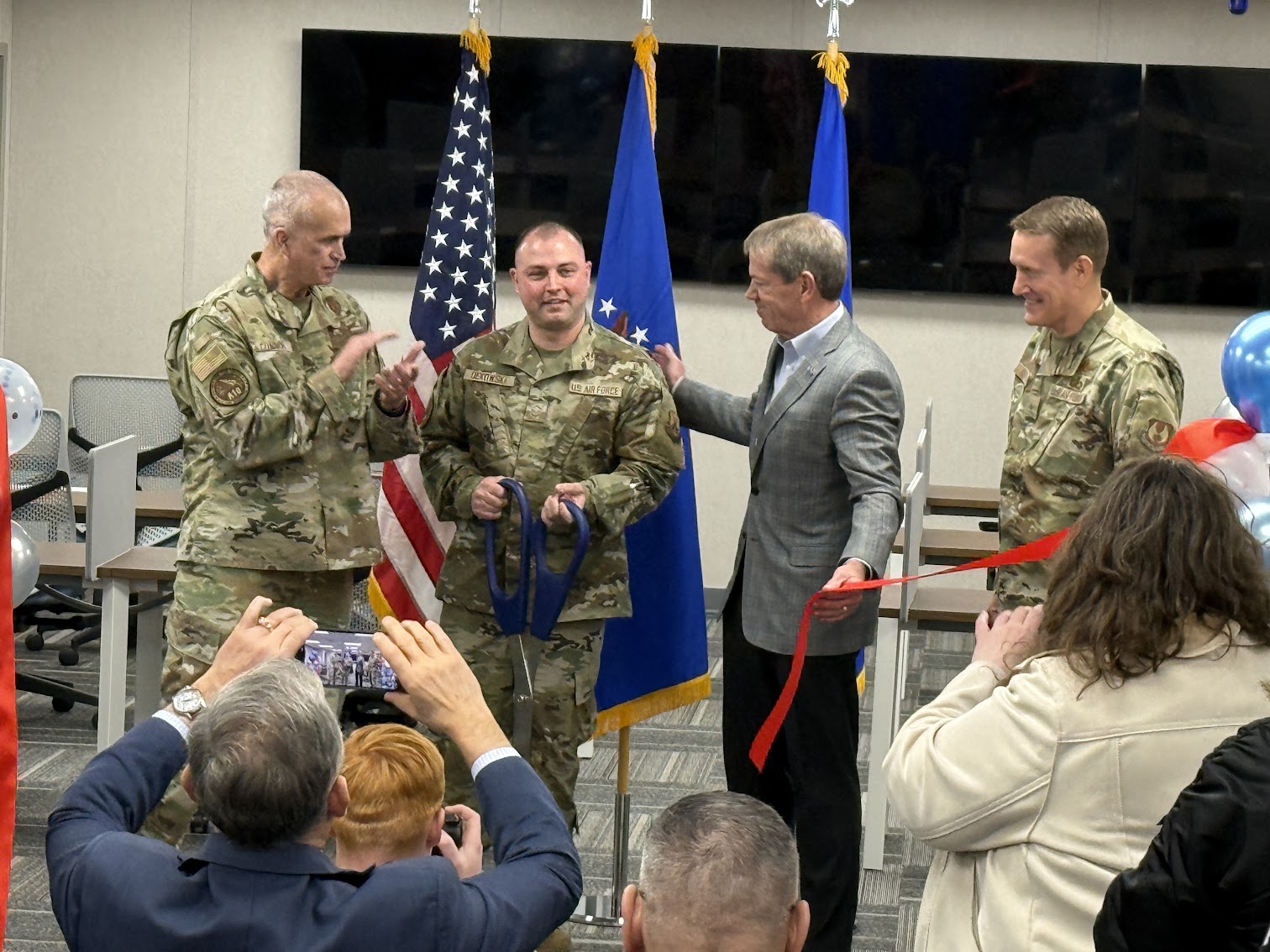
CHEYENNE, Wyo. — Military leaders, state officials, and defense partners gathered Wednesday at F.E. Warren Air Force Base to mark the opening of a new headquarters that will guide one of the largest nuclear modernization efforts in U.S. history.
The Sentinel program will replace the Minuteman III intercontinental ballistic missile system at F.E. Warren Air Force Base in Cheyenne, Wyoming.
The ribbon-cutting ceremony celebrated the Sentinel Site Activation Task Force Detachment 10 facility, a building that will serve as the operational hub for the transition from the aging Minuteman III missile system to the next-generation Sentinel intercontinental ballistic missile program.
For Northern Colorado residents, the ceremony underscores a quiet reality: just north of the Colorado border lies one of the nation’s most important strategic defense installations. Spread across the high plains of Wyoming, Nebraska, and surrounding areas, the missile fields operated from F.E. Warren Air Force Base form part of the land-based leg of the United States’ nuclear triad.
Hundreds of intercontinental ballistic missiles remain on alert there around the clock.

Maj. Gen. Colin J. Connor, director of the Air Force’s Intercontinental Ballistic Missile Modernization Directorate, presided over the ceremony and described the significance of the new facility.

“The walls and the roof that you’re sitting in right now will be the nerve center for everything that occurs here on base and across the missile fields in Wyoming, Nebraska, and Colorado,” Connor said.
While the building itself may appear modest, Connor emphasized that the work coordinated inside it will shape the future of the nation’s strategic deterrent.
“While structurally it’s just a building, the men and women who will work here over the next decade, fielding the Sentinel weapon system, will go write history from inside this building,” he said.
Connor also reflected on the personal significance of the moment. More than three decades earlier, he began his Air Force career nearby operating the Minuteman III missile system.
“Thirty years ago, I was walking these same grounds,” Connor said. “To see this come full circle and be part of building the future of the ICBM force is something special.”

(Photo by Blaine Howerton, North Forty News)
The Sentinel modernization program will replace the Minuteman III missiles that have been in service since the early 1970s. The effort involves a massive infrastructure overhaul across missile fields in Wyoming, Montana and North Dakota.

Brig. Gen. William “Buck” Rogers, interim commander of the Air Force Nuclear Weapons Center and program executive officer for intercontinental ballistic missiles, said installations like F.E. Warren remain central to U.S. national defense.
“The work done at places like F.E. Warren is the foundation of our nation’s strategic deterrence,” Rogers said. “This is where the mission begins.”
Rogers praised the coordination required to maintain the existing missile force while preparing to field the new Sentinel system.
“Supporting Minuteman III today while transitioning to Sentinel has required incredible teamwork,” Rogers said. “From the acquisition side to the operational side, this is the best collaboration I’ve seen in my career.”
The newly opened headquarters will bring together engineers, planners, operators, and contractors responsible for coordinating construction and modernization projects across the missile field.
Air Force officials say the Sentinel program will modernize the land-based leg of the U.S. nuclear triad — which also includes submarine-launched ballistic missiles and long-range strategic bombers — and extend the system’s operational life for decades.
For communities across Northern Colorado, the modernization effort represents the continuation of a mission that has quietly shaped life on the high plains for more than half a century.
Many residents of the region live within an hour’s drive of one of the largest intercontinental ballistic missile fields in the United States.
Following the ceremony, attendees toured the facility and met with members of the Sentinel Site Activation Task Force, which oversees the transition.
The building itself may be new, but the mission it supports remains one of the most enduring elements of America’s national defense — a deterrent system designed to remain ready, unseen, and largely unnoticed across the wide landscapes of the American West.
Make North Forty News part of your morning. Get Northern Colorado’s top stories, weather, and events every day at 5 a.m. in our Daily Update.
Attribution: Information from Sentinel Site Activation Task Force Detachment 10 ceremony remarks and Air Force Global Strike Command materials.