

By North Forty News Staff | NorthFortyNews.com
Wheat, corn and sorghum research aims to help farmers adapt to increasingly dry conditions across the West
As Colorado continues to face persistent drought and declining water supplies, researchers at Colorado State University are developing new crop varieties that can better withstand dry conditions while maintaining productivity. The work focuses on wheat, corn and sorghum—three crops that play critical roles in Colorado agriculture and global food security.
Colorado’s ongoing drought challenges have intensified this year following a historically low mountain snowpack, making water-efficient agriculture increasingly important. CSU scientists are combining traditional breeding techniques with advanced genetic research to help farmers produce more food using less water.


Wheat Program Builds on Decades of Success
CSU’s Wheat Breeding and Genetics Program has spent more than six decades developing wheat varieties suited to Colorado’s challenging climate. Today, CSU-developed wheat occupies approximately 85% of the state’s wheat acreage, reflecting the program’s close partnership with Colorado farmers.
Researchers test experimental wheat varieties on 16 farms across Colorado, allowing them to evaluate crops under the same real-world conditions farmers experience. The program has produced varieties that are not only more drought-tolerant but also resistant to pests and weeds.
Professor Esten Mason, who leads the wheat breeding program, said drought remains the single greatest challenge facing Colorado wheat growers. This year’s growing season illustrated those challenges, with many research sites receiving virtually no measurable precipitation for about eight months before late-season rains arrived too late to fully benefit stressed plants.

Corn Research Targets Genetic Traits
Corn remains Colorado’s top cash crop but requires significant irrigation. Researchers led by Professor John McKay are identifying the genetic traits that help corn tolerate drought stress, particularly through improved root development.
Scientists grow hundreds of corn varieties annually at CSU’s Agricultural Research, Development and Education Center, comparing plants grown under normal irrigation with those receiving limited water. By studying how roots respond to drought, researchers hope to identify genes that can be incorporated into future hybrids capable of maintaining yields under increasingly dry conditions.
Sorghum Offers Promise for Dryland Farming
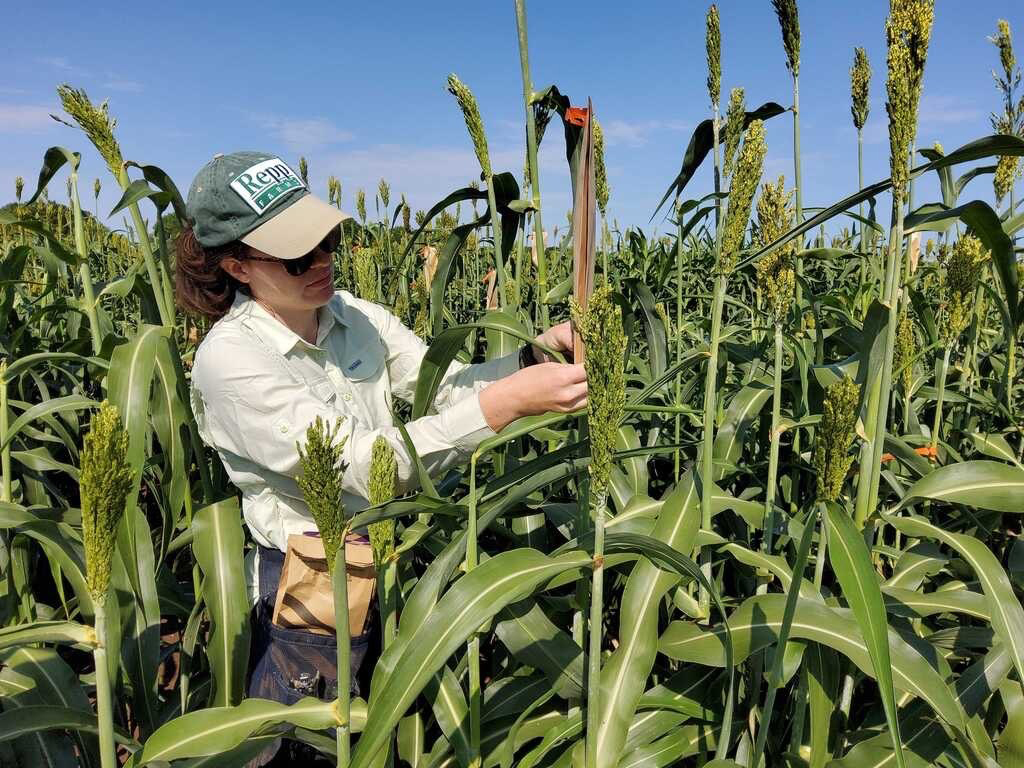
CSU researchers are also advancing sorghum, a naturally drought-tolerant crop that could become increasingly valuable across the High Plains as groundwater supplies decline.
Professor Geoff Morris and his research team are identifying genes responsible for traits such as “stay-green” characteristics and efficient water use. The work supports both Colorado agriculture and international food security, with sorghum serving as a staple food for roughly 500 million people worldwide.
Researchers combine DNA analysis, greenhouse studies, and field trials in Colorado and Kansas to ensure promising traits perform under real farming conditions before they are shared with breeding programs and producers.
Northern Colorado agriculture continues to adapt to changing conditions through innovation and research. Your support helps North Forty News report on the people, science and industries shaping our region’s future.
Become a North Forty News member.
Source: Colorado State University SOURCE.