

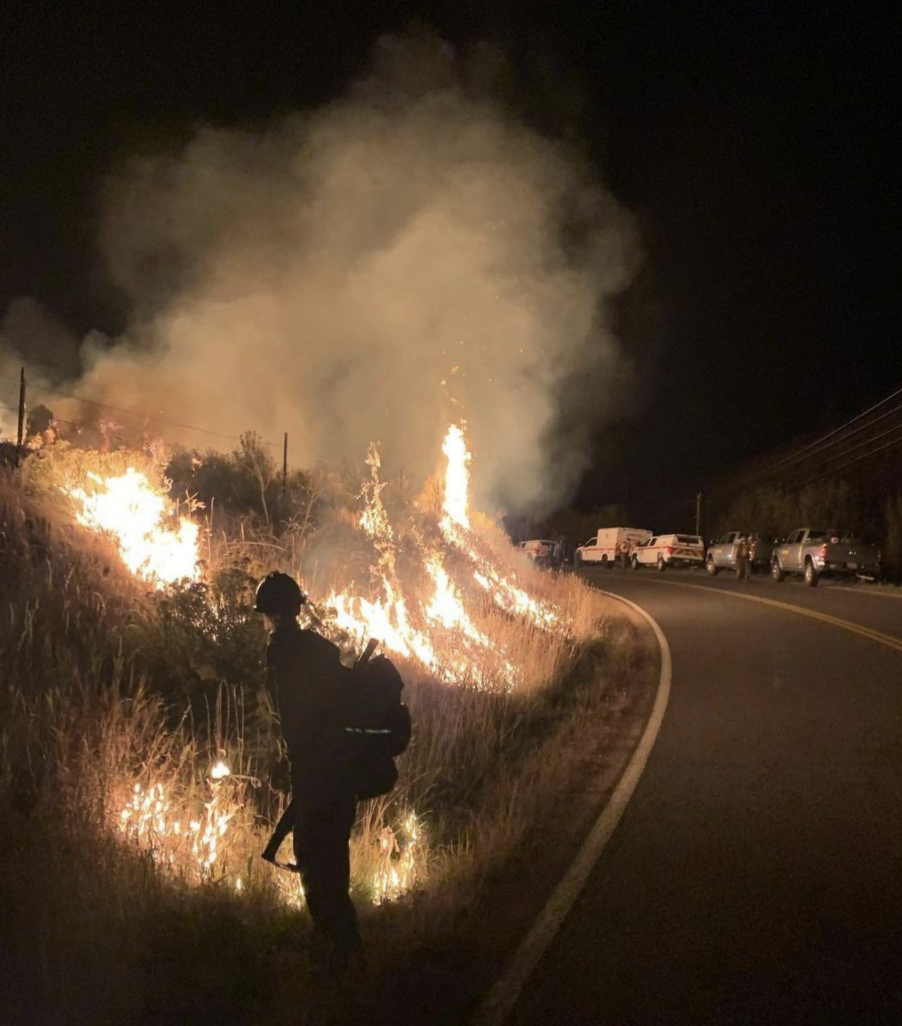
by Blaine Howerton | NorthFortyNews.com
Community voices, recovery statistics, and ongoing restoration efforts highlight Northern Colorado’s resilience after Colorado’s largest wildfire.
(August 22, 2025) It’s been five years since the Cameron Peak Fire ignited on August 13, 2020, and scorched about 208,913 acres (approximately 326 square miles) across the Arapaho and Roosevelt National Forests, Larimer and Jackson Counties, and Rocky Mountain National Park—marking it as Colorado’s largest wildfire on record.
The Fire’s Aftermath: What Was Lost—and Who Felt It

Over 6,000 people were evacuated at its peak—from Estes Park, Red Feather Lakes, Rustic, Chambers Lake, and surrounding communities. The fire destroyed a total of 469 structures, including 42 primary residences—touching homes, livelihoods, and the very fabric of small-town life.
Beyond properties, the Cameron Peak Fire’s legacy includes tragic tolls from post‑fire hazards. According to state wildfire compilations, six deaths were linked to post‑fire flash flooding and debris flows: four in 2021 and two in 2022.

Survivor Voices: Stories of Fear, Loss, and Determination
Around Reddit and local media, people recalled the anxiety and chaos of those months:
“It was terrifying… we had all summer in Estes, worrying if Cameron would move south…things start to die down, we might be in the clear.”
The emotional weight of watching forests turn to smoke and waiting for the all-clear continues to resonate in Northern Colorado.
Recovery Stats: Healing the Land, Step by Step

Forest Recovery & Reforestation Challenges
By 2023, the U.S. Forest Service had planted 344,000 seedlings across 1,800 acres of high-severity burn areas—an essential but modest step toward forest recovery.
However, reforesting the Cameron Peak burn scar remains a monumental task. An Associated Press investigation from September 2024 highlighted that across Western wildfires—including Cameron Peak—climate change, limited seedling supply, lack of nursery capacity, and delayed site prep are threatening forest regeneration, even decades later. (AP News)

Grassroots Restoration: Sweat, Saw, and Trail Work
Locally, Poudre Wilderness Volunteers (PWV), a Fort Collins nonprofit, has been central to rebuilding trails and restoring burned landscapes:
- In 2021, over 200 public volunteers and 50 PWV members contributed roughly 2,400 labor hours, removing 3,000 downed trees, clearing 60 miles of trail, and completing 11 miles of drainage improvements. 2022 efforts mirrored this impact.
These boots‑on‑the‑ground efforts underscore how community action bridges gaps that federal reforestation still strives to close.
Managing Scarred Landscapes

“The winds were blowing at 80 miles an hour, causing the fire to spread at a horrific rate,” said Mac McGoldrick, senior director of built and natural environment at the Shambhala Mountain Center. “The fire zoomed up to the center. The fire coming off the ridgeline from the west was pouring down into the valley like water.” (www.fs.usda.gov)
The fire didn’t burn uniformly across the terrain. According to forest ecologist Dr. Wayne Shepperd:

- About 6% of the burn area—mostly at higher elevations—experienced high soil burn severity, meaning relatively long recovery timelines.
- The rest ranged from moderate (30%) to low (44%) burn or remained unburned (20%). (rotarycluboffortcollins.org)
That variability aids in targeted recovery—though the most devastated parts may take years or decades to heal truly.
Looking Ahead: Preparedness & Lessons Learned
James White, a Forest Service fuels specialist, emphasized that prior vegetation treatments—clearing excess fuels—were instrumental in saving structures like the Shambhala Mountain Center by slowing the fire’s intensity. (fs.usda.gov)
That success story speaks volumes for the power of proactive forest management.