

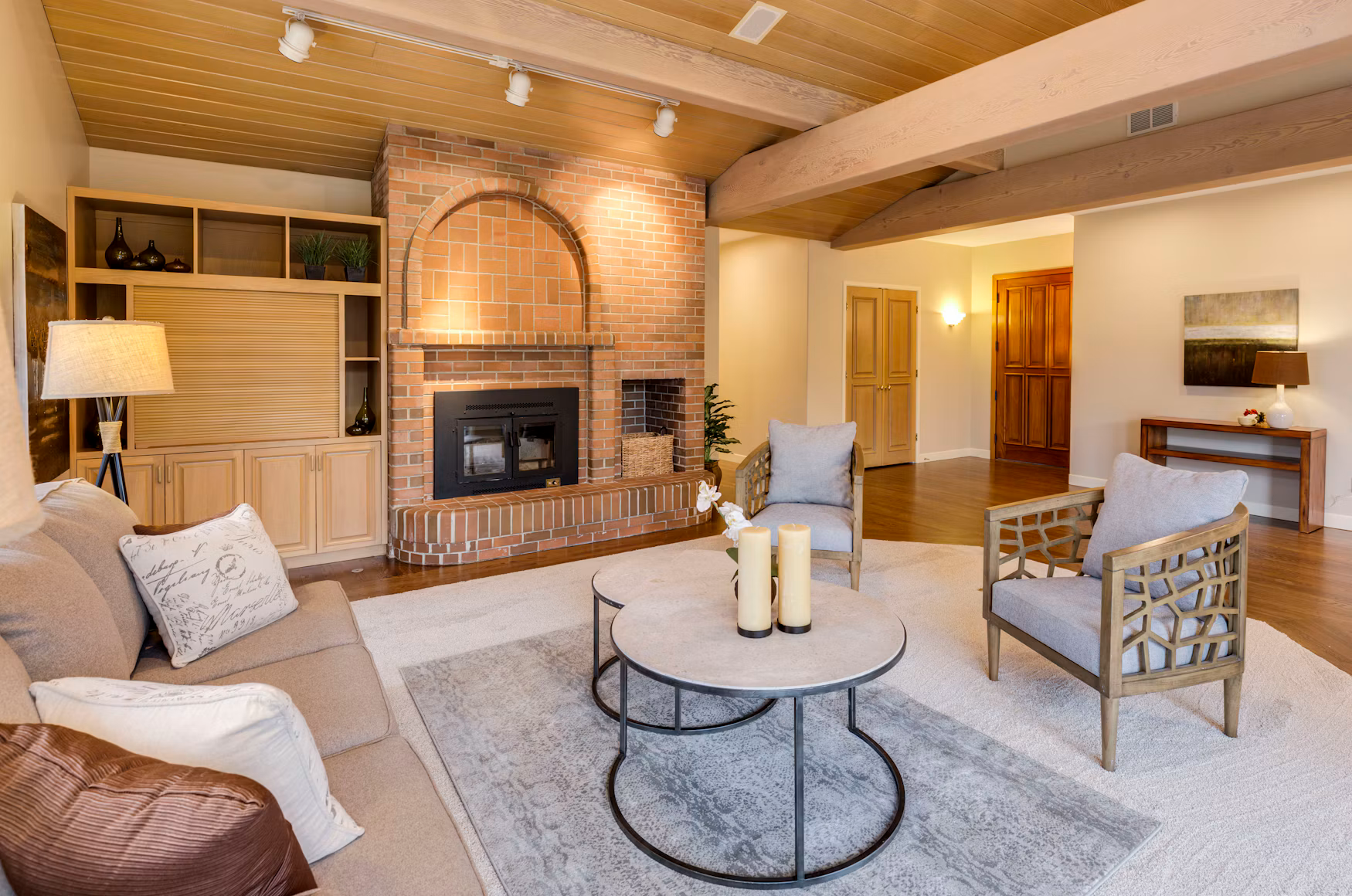
Image credit: Unsplash
A comfortable living room needs more than one bright fixture in the ceiling. Layered illumination spreads light across several heights and surfaces, making the room easier to use for reading, conversation, and quiet evenings at home. It can also highlight artwork, soften dark corners, and give an open-plan space a clearer sense of structure.
You don’t need to replace every fixture at once. Start by reviewing how the room looks after sunset, then add light where daily activities actually happen.

The Shortcomings of Overhead Downlights
Overhead downlights provide useful general illumination, but relying on them alone can leave a living room feeling flat. Light directed straight down may create bright patches on the floor while faces, walls, and corners remain shadowed. Glare can also become uncomfortable when people lean back on a sofa and look toward the ceiling.
Use overhead fixtures as the room’s base layer, then support them with lamps and wall-mounted lighting. The same lighting principles used when setting up a well-lit home chess corner can also apply to living spaces, where warm, diffused light helps reduce glare and makes the room more comfortable to use for longer periods. If possible, position downlights around the room’s edges or over specific features instead of arranging a rigid ceiling grid.
Creating Depth with Eye-Level Glow
Add one or two light sources near eye level to bring depth to the room. A table lamp beside the sofa can illuminate a book and brighten nearby faces, while a floor lamp in an empty corner keeps that area from disappearing after dark. Wall-mounted fixtures are useful where side tables or floor space are limited.

Materials affect the finished look, too. For a classic detail that adds warmth even when switched off, wall lights in an antique brass finish can sit beside artwork, shelving, or a fireplace. Place matching fixtures at a consistent height and check their position while seated. Shades should conceal the bulb from normal viewing angles to reduce glare.
Dimmer Switches Offer Easy Mood Control
Install dimmers on the fixtures you use most often. Full brightness may suit cleaning, puzzles, or family activities, while a lower setting feels more comfortable during a movie or conversation. Separate controls for ceiling fixtures and wall lights give you more flexibility than placing the entire room on one circuit.
Before buying a dimmer, confirm that the bulbs and fixture are dimmable. LED products also need a compatible LED dimmer. Mismatched components can cause buzzing, flickering, or a limited dimming range. Using a mix of ambient, task, and accent lighting can make the room more adaptable for different activities throughout the day. Labeling multi-switch controls can make a new setup easier for everyone to use.

Warm Color Temperatures for Evening Relaxation
Choose bulbs around 2700 kelvins for most casual living spaces. This warm white tone works well with wood, neutral fabrics, and earthy colors while producing a relaxed evening feel. A cooler bulb can be useful at a dedicated desk, but mixing noticeably different color temperatures within one seating area may make the room look disjointed.
Check the bulb packaging for both color temperature and brightness. Lumens tell you how much light a bulb produces, so they’re more useful than comparing wattage. Test new bulbs after sunset and view them from several seats. If one fixture looks harsh, try a lower lumen output, a frosted bulb, or a shade with better diffusion.
The final setup should support the room’s real routines. A ceiling layer for practical tasks, an eye-level glow beside the seating area, and dimmed warm light for late evenings will cover most needs without making the space feel overlit.