


Alex Tisthammer | Fort Collins Nursery
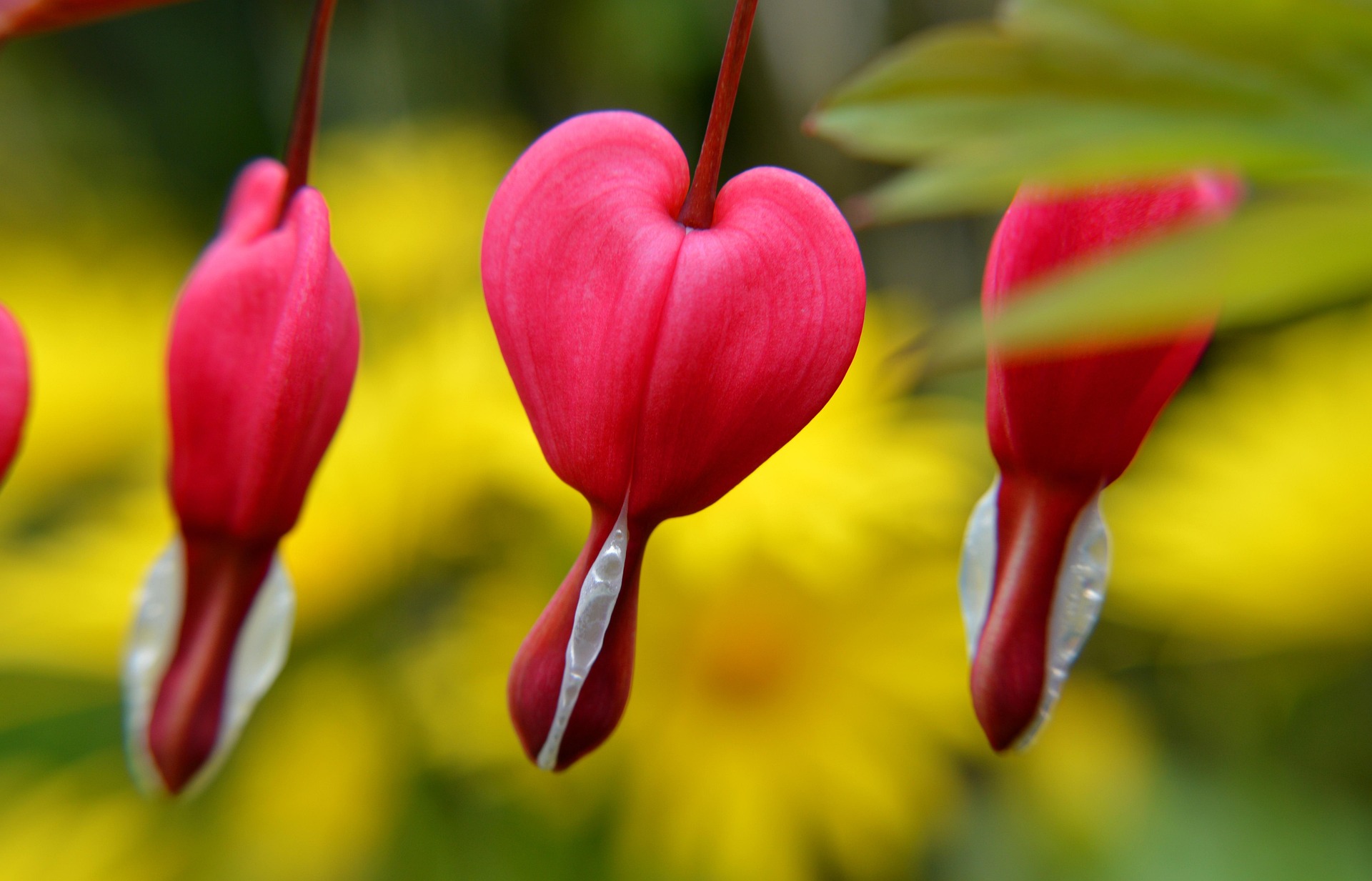
One of my first childhood memories involving a plant was with the swoon-worthy Old Fashioned Bleeding Heart. A patch of them grew along the fence at my preschool, the Children’s House in Fort Collins. I would walk along the fence as I was leaving school for the day and pick up the fallen flowers on the ground. I may have been a little selfish and plucked one or two that were still on the plant. The flowers were a treasure to little me, so beautiful and unique. I would carry them carefully in my hand all the way home and place them in my room. After a few hours they would become brown and faded, but for that brief moment they were a magical prized possession. To this day, this iconic plant has always held a place in my heart (pardon my pun.)


The Old Fashioned Bleeding Heart, Lamprocapnos spectabilis (formerly Dicentra spectabilis) is native to Northeast China and the Korean Peninsula. It was first introduced in England from Asia in 1810, then reintroduced in 1846 after it had been lost for a number of years. The pink variety, along with its other cultivars, were officially placed into a separate genus, prompting the name change in August 2006 (though studies to do so started in 1997.) The North American native species are still under the Dicentra genus. When comparing the two, it’s clear why botanists make the split.

Despite the change, the two genera have very similar needs when it comes to growing conditions and where they should be placed in the garden. Bleeding Hearts prefer to grow in dappled shade – morning sun and afternoon shade is ideal. They are a rhizomatous perennial, having a large root system that supports the plant. When they go dormant in the summer, this root system stores all the plant’s energy to sustain itself until the next spring.
The biggest difference between the two genera other than their appearance is the timing of summer dormancy. The Old Fashioned Bleeding Hearts are usually completely gone by midsummer, while the North American types will stop flowering and start going dormant by mid- to late-summer. They are considered spring ephemerals, a group of plants that usually are native to deciduous woodland areas. Spring ephemerals have developed this characteristic in order to take advantage of the high sunlight in the spring when the forest canopy has not fully leafed out. Because of this, bleeding hearts should be placed in the middle of the garden, to hide the bare ground that appears once their stems wither. Planting both types in afternoon shaded areas can delay the tendency towards summer dormancy for a period of time.
Bleeding Hearts, no matter what type, capture the imagination and make any garden feel ethereal. If your garden (and your heart) are open to a dash of ephemeral magic, I hope you’ll add a few to your shady garden bed this spring!