

Kelly Kellow, Horticulturist, Gardens on Spring Creek

The tale of the poinsettia spans hundreds of years, with countless twists and turns that have wound their way into our holiday tradition.

In the 17th century, there was a legend of a young girl named Pepita who was traveling to her village nativity. She did not have money to buy a present for baby Jesus at the service, so she gathered a bundle of roadside weeds and formed them into a bouquet. Upon entering the chapel and presenting her bouquet of weeds, they miraculously turned into a bouquet of beautiful red flowers that we today call poinsettias. The folklore continued for 200 years and remained a tradition in the small villages of Mexico.
On a trip to Mexico in 1828, Joel Poinsett was walking through the valleys of Taxco in southern Mexico, where he was mesmerized by a plant with beautiful red flowers. Unable to part from the plant, he took cuttings back to his home in South Carolina, where he owned a greenhouse. Having a love of botany, Joel Poinsett began studying and cultivating the plant. During the holidays, when the leaves are at their most vibrant red, he would give his plants to friends as gifts.

The word about these beautiful plants with their magnificent red color spread through towns on the East Coast of the United States and soon became a popular holiday gift. In 1836, the plant was formally named Poinsettia after the man who introduced it to America, thereby creating the treasured holiday tradition.
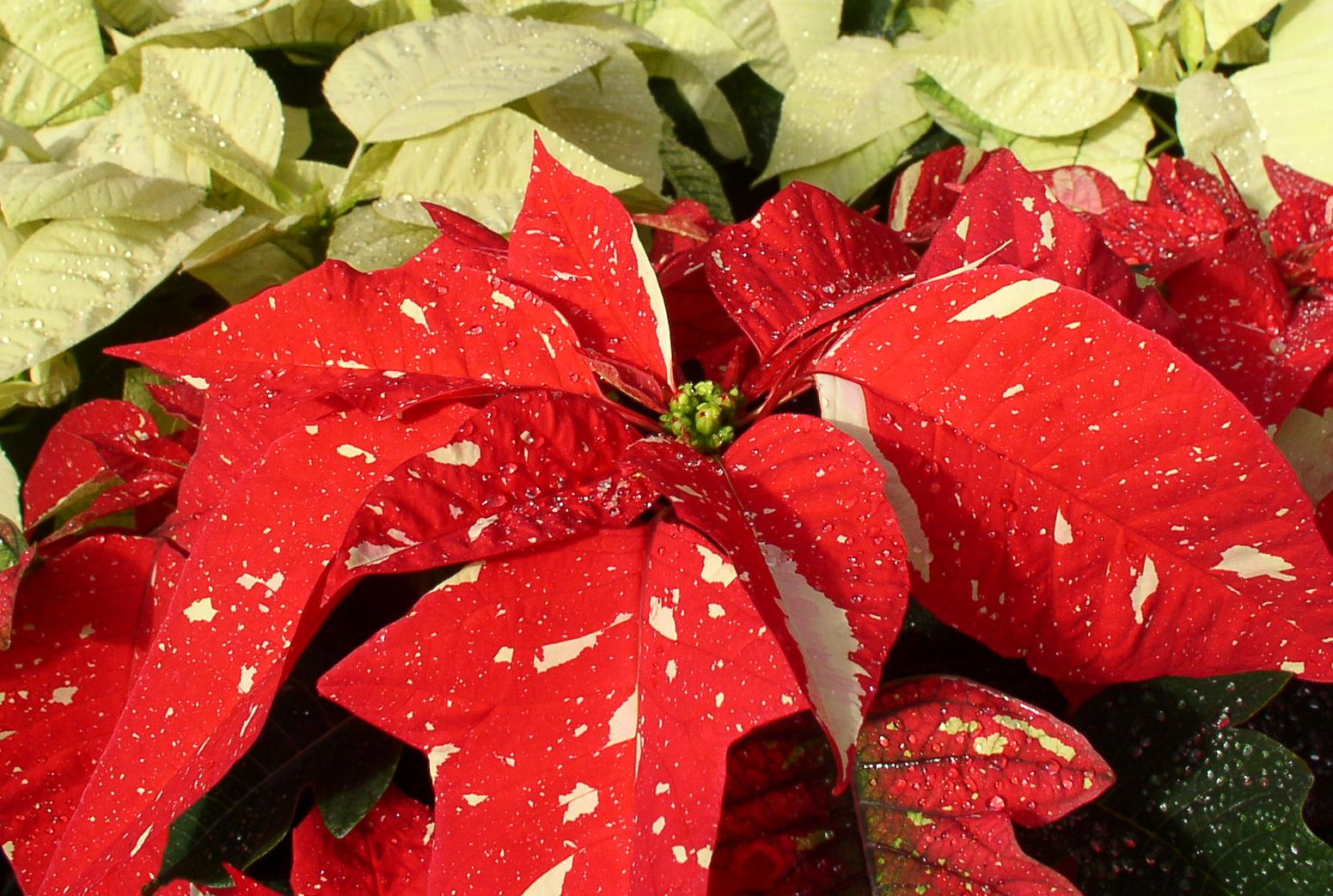
Today, Paul Ecke and his greenhouse company have created more than 100 varieties of poinsettias. They vary in color, including bright pink, white, copper, speckled white, and red. Newer varieties even feature ruffled leaves, with more varieties introduced every year.

In the wild, poinsettias, or Euphorbia pulcherrima, are deciduous flowering shrubs that grow up to 10 feet tall and thrive in USDA Hardiness Zones 9–11. What appear to be flower petals are actually colored bracts (modified leaves) that surround a central cluster of yellow flowers. Intolerant of the cold, poinsettias are exclusively grown in greenhouses and sold as houseplants.
With the proper care, poinsettias can be more than just a holiday plant – you can keep them year-round with these basic steps. After the holidays, when temperatures are at least 60 degrees Fahrenheit, you can keep the poinsettia in a pot outside in a partially shaded area. To get the plant to turn color again for the holidays, start a 12-hour darkness period at the beginning of October. Using a cardboard box, place the plant in it for 12 hours of the day, such as 5:00 pm. to 8:00 am. Then, during the day, keep the plant in lots of light. Make sure to keep the soil evenly moist with a fertilizing schedule of every other week with a general-purpose fertilizer.
Poinsettias are a beautiful tradition and can be enjoyed in the home for months after the holidays.