

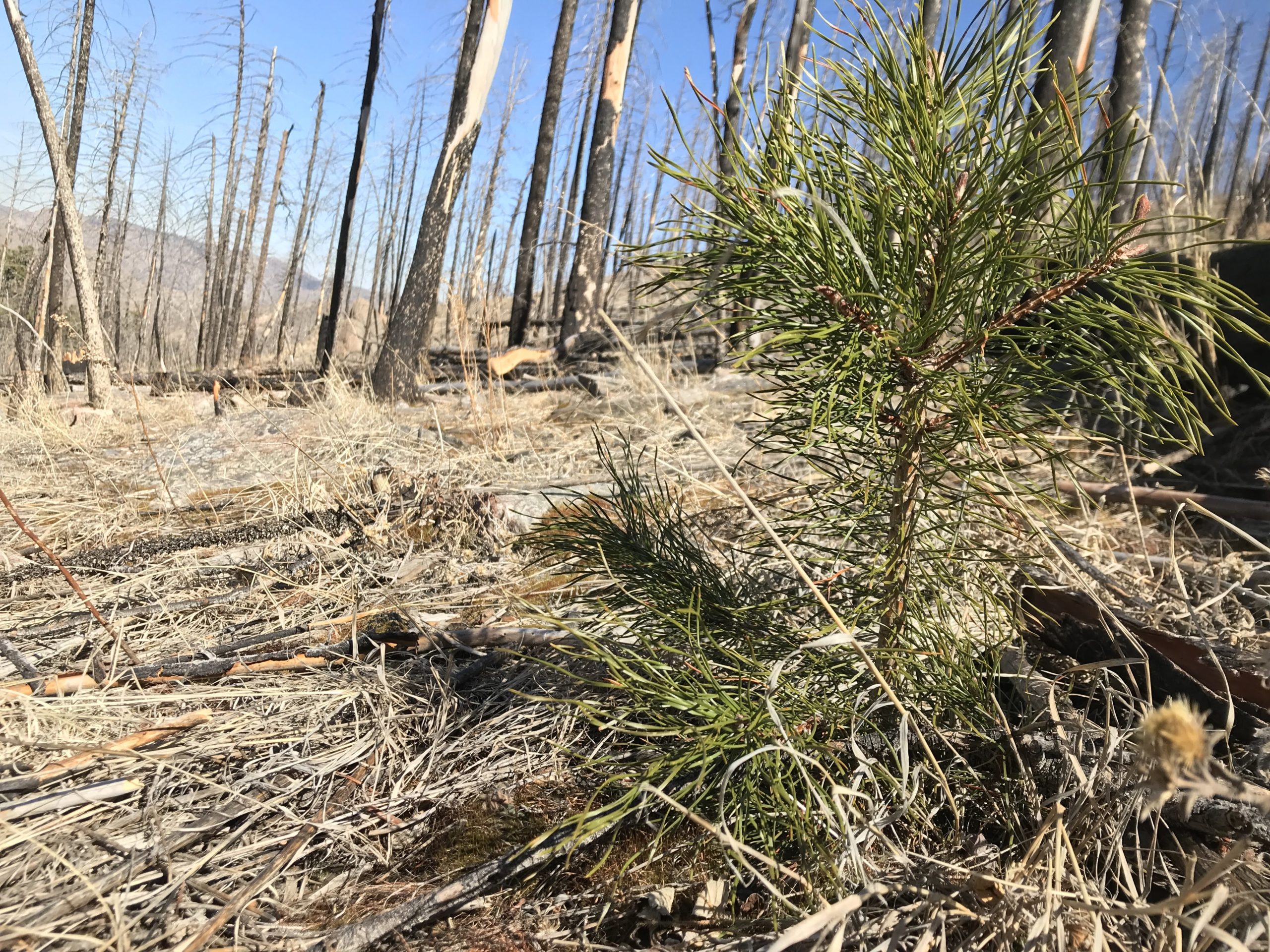
CSU researchers find faster fires cause more severe tree loss and increase the risk of lasting ecological change
By North Forty News Staff | NorthFortyNews.com
Fast-moving wildfires sweeping across western North America may be doing more than burning larger areas. New research involving Colorado State University suggests these rapidly spreading fires can cause substantially greater damage, leaving forests less capable of returning after the flames are gone.
A study by CSU, Western Colorado University, and other research partners examined nearly 3,500 wildfires that burned in conifer forests across western North America between 2012 and 2023. Researchers found that the fastest-moving fires were associated with more severe burning, greater tree mortality, and fewer surviving trees available to reseed burned landscapes.
The findings were published in Science Advances.

“People often focus on the size of a wildfire because that’s what makes headlines,” said lead author Jonathan Coop, a professor at Western Colorado University. “But how fires burn is as important as how much they burn. In forests, fire speed not only increases acres burned but also leads to outsized impacts to each of those acres.”
Researchers analyzed more than 33,000 individual daily wildfire spread events, comparing the fire speed with the conditions left behind.
As fire spread rates increased, researchers found more forest areas experienced near-total tree mortality. Fast-moving fires also created greater distances between burned areas and surviving trees that can supply seeds for natural regeneration.
That can have major consequences for western forests, where many tree species depend on nearby living trees to repopulate after wildfire.
“When severe fires leave large expanses without seed trees, the forest has a harder time recovering and, in some places, may not recover as a forest at all,” said Camille Stevens-Rumann, director of the Colorado Forest Restoration Institute and a CSU professor of forest and rangeland stewardship.

Instead of returning to forest, severely burned areas could gradually transition into shrublands, grasslands, or other vegetation better adapted to warmer and drier conditions.
“The story isn’t just we’re getting bigger fires,” Coop said. “It’s that the kinds of fires we’re seeing today are creating fundamentally different landscape outcomes.”
The research builds on previous studies showing that a relatively small number of extreme fire-spread events account for a disproportionate amount of acreage burned each year. Climate conditions are also increasing the likelihood of those extreme events.
Researchers said active forest management could help landscapes better withstand future wildfires. Strategies include forest thinning, prescribed burning, managing naturally occurring fires under less extreme conditions, and expanding restoration efforts following major fires.

But researchers cautioned that continued warming will make those efforts increasingly difficult.
“Wildfire has always been part of western forests,” Coop said. “What’s changing is the pace and impacts of fires. As extreme events become more common in a hotter, drier climate, we can’t count on forests to persist or grow back the way they have in the past.”
The study included researchers from CSU, Western Colorado University, UC Berkeley, the U.S. Forest Service, the Canadian Forest Service, and other institutions.
Source: Colorado State University News and Media Relations; adapted from a Western Colorado University news release.
From wildfire research and forest health to water, wildlife and changing conditions across the West, North Forty News keeps Northern Colorado readers informed about the issues shaping our landscape. Start your North Forty News trial today.