

by Blaine Howerton | NorthFortyNews.com
Colorado State University station shows city received just 20% of normal precipitation to start 2026
After weeks of dry skies, Fort Collins received measurable moisture this week — the first significant precipitation recorded in more than six weeks.
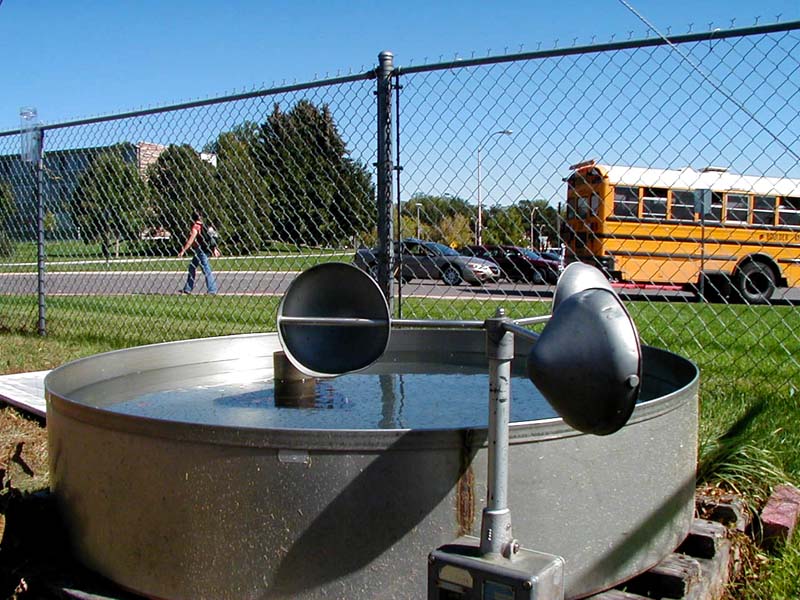
The data come from one of Colorado’s oldest and most historic climate stations: NOAA Station USC00053005, located on the campus of Colorado State University just northwest of the Lory Student Center.

The Fort Collins Weather Station has been collecting data near this site since the 1870s, when observations began near the former Old Main building. Daily climate records have been complete and continuously available since January 1, 1889 — making it one of the oldest weather stations in Colorado and an invaluable scientific resource for understanding long-term climate trends in Northern Colorado.


According to official NOAA data from the CSU station, Fort Collins recorded just 0.17 inches of total precipitation during January and February 2026 combined.
The last measurable precipitation event before this week occurred on January 19, when 0.10 inches of liquid equivalent (1.5 inches of snow) was recorded. Prior to that, only 0.07 inches fell on January 8. February recorded no measurable precipitation at the official station through the end of the month.
That means Fort Collins went more than six weeks without measurable moisture.
How Far Below Normal?

The 30-year climate normal (1991–2020) for January and February combined in Fort Collins is approximately 0.84 inches of precipitation.
With only 0.17 inches recorded this year through February, the city received about 20% of normal precipitation to start 2026.

Because the CSU station has maintained a continuous daily climate record since 1889, comparisons like this are grounded in more than a century of local data — not short-term estimates.
A Living Scientific Instrument
Today, the Fort Collins Weather Station operates with a combination of automated and manual observations.
Automated instruments record temperature, humidity, wind speed and direction, pressure, solar radiation, and soil temperatures, with updates every 10 minutes.
Manual observations are taken every 12 hours and include precipitation, snowfall, cloud and sky conditions, visibility, evaporation, wind, temperature, and humidity — providing the official measurements that feed national climate datasets.
That blend of automation and hands-on observation is part of why the station remains a cornerstone of Fort Collins’ climate record.
Drought Conditions Continue
The dry start to 2026 aligns with broader drought conditions across Northern Colorado. According to the latest U.S. Drought Monitor, much of Larimer County remains classified in moderate to severe drought (D1–D2) categories.
While one storm does not erase long-term moisture deficits, this week’s precipitation marks a meaningful break in what has been one of the driest January–February periods in recent years.
Make North Forty News part of your morning. Get Northern Colorado’s top stories, weather, and events every day at 5 a.m. in our Daily Update.
Sources:
National Oceanic and Atmospheric Administration (NOAA) – Fort Collins Station USC00053005 (Colorado State University Experimental Station) Daily Climate Data
NOAA 1991–2020 Climate Normals
U.S. Drought Monitor
Colorado State University Fort Collins Weather Station historical records