

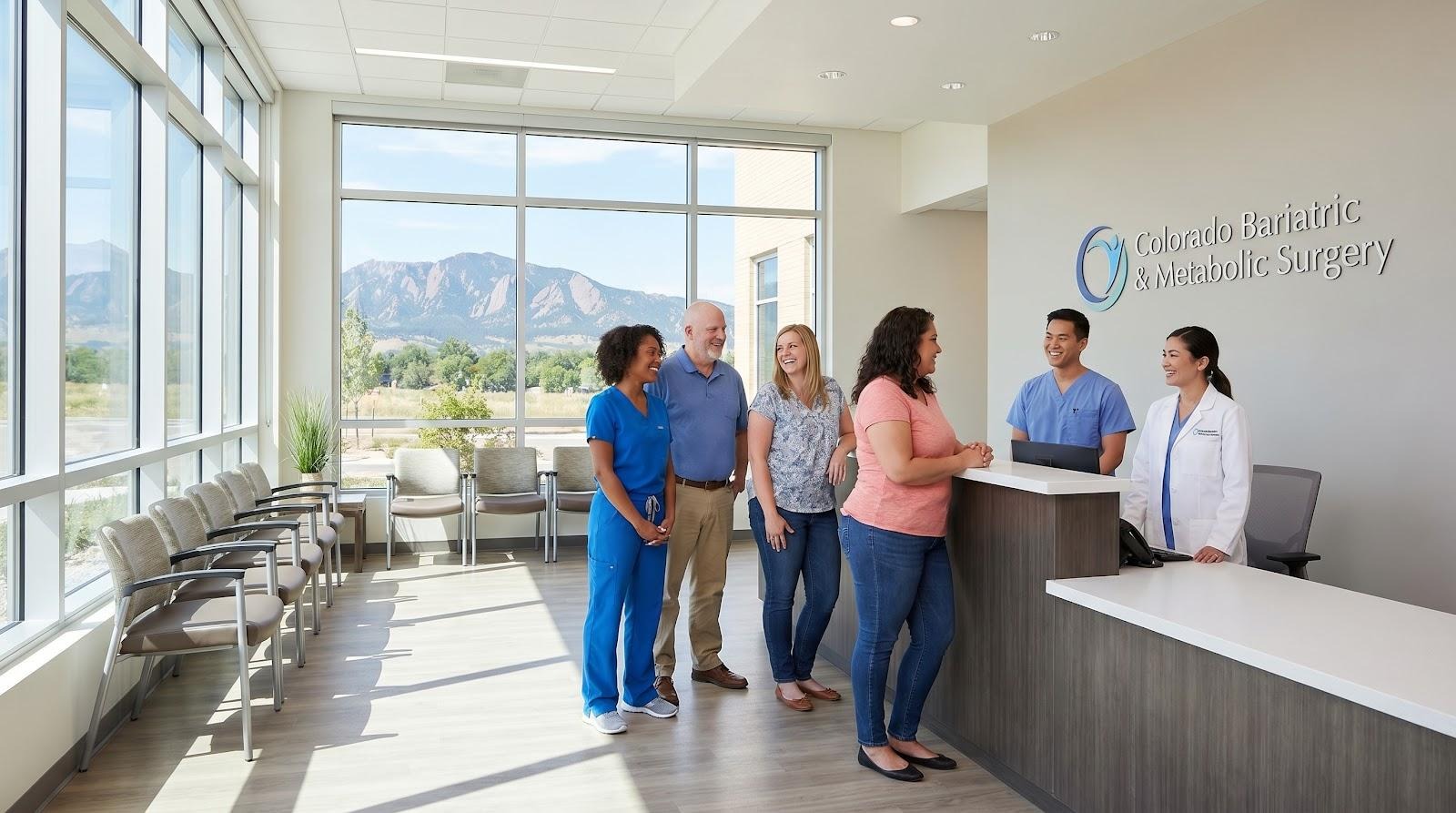
Sticker shock shouldn’t keep you from a healthier life. In south-metro Denver, self-pay gastric sleeve prices swing from $12,250 at the Bariatric & Metabolic Center of Colorado to nearly twice that at big hospitals.
Even value-priced Denver Health still lists $11,337 before extras. Starting in 2025, Colorado’s Senate Bill 24-054 makes bariatric coverage mandatory for private insurers, shifting more of that bill away from your pocket.
We dug into 2024–25 price files, finance-office emails, and real patient stories to rank the five most accessible south-Denver programs on cost, quality, insurance, and financing. Here’s what we found.
Why bariatric surgery prices swing so widely

Walk into two clinics ten miles apart and you may hear quotes that differ by several thousand dollars. That spread has clear causes once you know what to watch.
Facility type is the first lever. Independent programs such as the Bariatric & Metabolic Center of Colorado lock in their own operating room rates and bundle them, which explains the transparent $12,250 sleeve price mentioned earlier. Full-service hospitals carry larger overhead. At Denver Health, the self-pay sleeve starts at $11,337 before anesthesia, labs, and a two-night stay that can push the total into the high-teen range.
Procedure complexity also matters. A standard sleeve is shorter and uses fewer single-use instruments than a gastric bypass, so it costs less. Revision cases or a duodenal switch can nearly double the bill because they require longer OR time and higher-risk coverage.

Next, look at what the bundle does and does not include. Some “all-in” offers stop at 90 days of follow-up, while others add diet classes, psychologist visits, and lifetime support groups. Request a line-item sheet so a $400 nutrition class or $300 psych evaluation does not become a surprise.
Insurance status shifts the math again. Beginning in 2025, Colorado requires every state-regulated private plan to cover bariatric surgery. If your employer plan follows those rules, your share shrinks to deductible and coinsurance. If it does not, clinics often counter with self-pay discounts or financing, which explains why hospital and private-center quotes rarely match.
Finally, geography plays a part. South-metro Denver carries higher real-estate and labor costs than rural areas, yet competition among multiple programs pushes cash prices lower, giving you room to negotiate.
Bottom line: when you understand these drivers, the price puzzle becomes a menu. Choose the elements you need, skip the ones you do not, and ask every provider to explain the dollars instead of making vague promises.
How we built the rankings
We skipped marketing blurbs and star ratings. Instead, we built a scoring grid and let the numbers decide.
First, we pulled 2024–25 self-pay prices from each provider’s transparency files or finance-office emails. When a hospital listed surgeon fees apart from facility costs, we combined them so every sleeve price reflects the full walk-out bill.
Next, we added six factors that cash-pay patients care about: accepted insurance networks, in-house or third-party financing, surgeon credentials, accreditation status, real patient reviews, and practical access such as wait time and parking. Each factor carried a weight. Price led at 35 percent, while quality markers (board-certified surgeons and MBSAQIP recognition) shared another 30 percent.
Every clinic earned a 0-to-10 score per factor. We multiplied each score by its weight, then summed the results for a 100-point scale. If two clinics tied, we looked at transparency: providers that publish a clear line-item bundle outranked those that say “call for quote.”
Finally, we cross-checked the math with patient stories. If a program looked strong on paper but patients reported surprise fees, we revisited the transparency line. If a small practice handled only a handful of cases, we adjusted for limited track record.
The result is the ranking below, a data-driven snapshot of where your money, insurance, and peace of mind stretch furthest in south-metro Denver.
1. Bariatric & Metabolic Center of Colorado (Parker) – best overall value
If you want a number that stops the scroll, start here. BMCC posts a clear cash price of $12,250 for a sleeve gastrectomy, hospital stay included—well below the $14,000–$23,000 national range detailed on its bariatric surgery cost page. No hidden program fees and no surprise anesthesia bill weeks later.

Bariatric & Metabolic Center of Colorado bariatric surgery cost page screenshot
That transparency reflects an efficient partnership with Parker Adventist Hospital, allowing the clinic to lock in operating room costs and pass the savings to you. After checking dozens of Colorado price sheets, we found nothing in metro Denver that beats it.

Low cost does not replace credentials. Lead surgeon Dr. Joshua Long is double board-certified and directs an MBSAQIP-accredited bariatric program. You receive care in a facility that tracks every complication and publishes the scorecard.
Insurance choices are strong as well. BMCC works with most major carriers and gains extra reach from Colorado’s 2025 coverage mandate, so many readers can switch from cash to coinsurance with one call. Self-pay patients can still use HSA funds and major credit cards; CareCredit is not offered, so a zero-percent promo card may help if you need installments.
Patients praise the hands-on support: required nutrition classes, included psychologist visits, and a nurse who replies within hours. One recent graduate summed it up: “I feel like I won the lottery; the price was the kicker, but the follow-through sealed it.”
BMCC ranks first because it pairs the lowest verified self-pay price in the region with top-tier safety credentials and full cost transparency. No other clinic matches that trio.
2. Sky Ridge Medical Center (HealthONE, Lone Tree) – hospital strength, competitive price
Sky Ridge bridges boutique service and academic resources. As part of HCA HealthONE, it pairs big-hospital support with a bariatric team focused solely on weight-loss surgery.

Sky Ridge Medical Center weight loss surgery program webpage screenshot
Pricing is leaner than most full-service facilities. Surgeon fees start near $4,500 for a sleeve; after adding anesthesia and a one-night stay, the all-in estimate sits around $16,000–$18,000. That is several thousand above BMCC yet still under many metro hospitals that exceed twenty grand.
Insurance widens the value. HealthONE contracts with every major commercial carrier, Medicare, and Medicaid, so insured patients often face only a deductible and coinsurance. Self-pay patients can set up zero-interest plans for up to twelve months, avoiding high-rate medical credit.
Quality checks every box. The program holds MBSAQIP accreditation, and lead surgeon Dr. Frank Chae has performed thousands of bariatric cases over three decades. You also gain an ICU safety net and on-call specialists, a comfort if you manage diabetes, sleep apnea, or cardiac risk.
Reviews highlight a well-run “Fast Track” pathway: consult on Monday, surgery within six weeks, and all paperwork handled by one coordinator. A few self-pay reviewers advise requesting an itemized quote early so the facility fee does not surprise you later, but they still rated the experience five stars.
Choose Sky Ridge when you want hospital depth, broad insurance acceptance, and a cash price below Denver’s hospital average. You will pay more than at BMCC, yet you gain extensive resources in return.
3. UCHealth Highlands Ranch Hospital – academic muscle in the suburbs
Picture the clinical power of a university medical center on a new suburban campus. That is Highlands Ranch Hospital. Opened in 2019, the facility offers teaching-hospital tech such as robotic OR suites and full-time intensivists, all within a fifteen-minute drive for most south-metro residents.
Cash price is the trade-off. UCHealth’s estimator lists an uninsured sleeve between $20,000 and $22,000 once surgeon, anesthesia, and room charges are combined. That is about eight thousand above our list leader, so value here rests on two perks: strong insurance contracts and deep clinical resources.
On insurance, UCHealth works with nearly every commercial plan, Medicare, and Medicaid. Patients who meet bariatric criteria often owe only a deductible and coinsurance instead of the list price. The hospital’s Patient Estimates team can pre-run benefits so you know your share before committing.
Quality credentials read like an academic résumé. The bariatric service follows University of Colorado protocols, tracks outcomes in national registries, and staffs dietitians, psychologists, and physical therapists under one roof. For complex cases—such as prior abdominal surgery or a BMI above 55—those extra layers can lower risk.
Patients praise spacious rooms and quick nurse response. The downside is timing: because surgeons also teach and research, surgery dates can stretch eight to ten weeks from consult. If you need an earlier slot, look higher on this list.
Bottom line: choose Highlands Ranch when clinical depth matters more than sticker shock. Self-pay readers will spend more, but insured patients often gain an academic safety net at little extra cost.
4. Littleton Adventist Hospital – long-running support, higher sticker
Littleton Adventist has offered bariatric surgery longer than any facility on this list. Generations of Denver patients learned their post-op diet in Littleton’s classroom and still join monthly support groups for accountability.
That history shows in the wraparound care. From day one you meet a dietitian, a behavioral health specialist, and a nurse navigator who books every test in one sitting. The program’s faith-based roots emphasize whole-person wellness, not a quick OR visit and goodbye.
Cost transparency is the catch. Centura / AdventHealth hospitals publish giant chargemaster spreadsheets but stop short of a clear self-pay bundle. After reviewing those files and confirming by phone, we estimate a sleeve package at $20,000–$21,000 and a bypass above $24,000. A fifteen-percent cash discount applies if you pay in full before surgery, yet the starting figure still places Littleton fourth.
Insurance acceptance ranks high. The hospital is in network with major commercial plans, Medicare, and Colorado Medicaid, and it holds Blue Distinction and MBSAQIP designations, badges many insurers require for pre-authorization. For insured readers that often means one hospital bill after you meet your deductible.
Financing is flexible. Centura’s billing team offers twelve-, eighteen-, or twenty-four-month payment plans with no interest when you set up automatic withdrawals. That eases the hit for self-pay families who value Littleton’s legacy but hesitate at the bigger price.
Reviews praise compassionate nurses and an “army of educators,” though some patients note parking fees and the large-system paperwork maze. Our take: if you want a seasoned team with strong spiritual or community support, and insurance covers most of the bill, Littleton delivers. If you are paying entirely out of pocket, earlier entries on this list offer sharper value.
5. Colorado Bariatric Surgery Institute (CBSI) – robotic precision, lowest price
If you want advanced robotics at the smallest verified price, CBSI delivers. The practice advertises a robotic sleeve package at $11,800, the lowest figure we found in Colorado and just under the Parker benchmark.


Colorado Bariatric Surgery Institute official website screenshot
How do they reach that number? Surgeons use efficient robotic techniques at partner sites such as Parker Adventist Hospital, trimming operating-room time and passing the savings to you.
Volume stays high, yet care feels personal. Consults take place in several offices, including a welcoming Castle Rock location, often with the same team that will answer your post-op questions. Reviewers praise Dr. Wanda Good’s bedside manner and say, “The staff knew me, not just my chart.”
Scope is a strength, not a warning sign. This dedicated practice handles hundreds of cases each year, and founder Dr. Thomas Brown has performed more than 6,000 bariatric procedures. CBSI is an MBSAQIP-accredited Center of Excellence, fully prepared for complex revisions or BMI extremes.
Financing looks friendly. CBSI partners with medical-loan platforms and offers free insurance evaluations. Insurance acceptance is solid, though a few niche plans sit outside their contracts, so call to confirm.
Choose CBSI when you want robotic technique, the lowest bill, and a highly experienced team. Skip it if you prefer a large academic center over a focused bariatric institute.
The cost of obesity vs. the cost of surgery
Step back and look at lifetime spending, not just the day-of bill.
Untreated obesity is costly. Extra prescriptions, sleep-apnea gear, joint injections, and higher insurance premiums stack up year after year. Analysts estimate the added medical spend runs about 80 percent above what a healthy-weight adult pays. Over a decade that slow leak can exceed six figures.
A one-time sleeve priced at $12,000 to $22,000 may feel steep until you compare cash flow. Many patients drop blood-pressure drugs within months, trim diabetic supplies, and cut co-pays for specialist visits. Several studies show the procedure pays for itself in two to four years on medication savings alone.

Quality of life adds another return. Patients describe hiking without knee braces, booking airline seats without extender belts, and playing on the floor with grandkids. One self-pay patient who spent more than $30,000 for a revision said, “It was still cheaper than a heart attack.”
Consider the popular alternative: GLP-1 weight-loss injections. At about $1,300 a month, five years of shots cost more than a bypass, with no assurance insurers will keep covering them. Many regain weight after stopping the drug, erasing much of the spend.
Bottom line: surgery is the larger upfront check, but for most candidates it becomes the cheaper, cleaner line on a long-term balance sheet and a direct route to lasting health.
Smart ways to finance your surgery
Start by squeezing every dollar from insurance. Colorado’s new mandate means state-regulated plans must cover bariatric benefits in 2025. Call your carrier and ask three questions: “Is bariatric surgery covered? What criteria must I meet? What will my out-of-pocket cost be after deductible and coinsurance?” If the answers feel unclear, request the policy excerpt in writing. Clarity now prevents appeal headaches later.
No coverage? Move to cash-pay tactics. Every hospital on our list offers a payment plan. Ask for zero-interest terms and confirm the schedule in writing. Twelve months at zero beats a card that jumps above 20 percent if you miss the promo window.
Before using CareCredit, compare introductory 0 percent APR cards. A standard card with 15 to 18 months interest-free and stronger consumer protections often wins on total cost.

Personal loans come next. Online lenders such as LightStream or Prosper fund within days and spread payments over three to five years. Rates depend on credit score, so gather at least three offers and compare them with hospital plans.
Tap tax-advantaged funds last. Health Savings Account dollars cut the bill by your tax bracket. A $7,000 HSA withdrawal in a 24 percent bracket effectively saves $1,680 for vitamins and protein powder later.
Negotiate every quote. Bring a competing price to the finance office. Many centers match or beat rivals, especially near quarter-end revenue targets.
Finally, budget soft costs. Plan for unpaid time off work, early protein supplements, and follow-up labs. Adding these to your worksheet keeps you from reaching for high-interest credit six months after surgery.
Stack these moves and you can turn a five-figure hurdle into a predictable monthly line that shrinks as your health improves.
Frequently asked questions
Will my insurance cover bariatric surgery in Colorado?

Yes. If you carry a state-regulated individual or small-group plan, coverage becomes mandatory in 2025 under SB 24-054. Many large-employer plans and Medicare already cover it, provided you meet BMI and health criteria. Call your carrier, cite the law, and ask for written confirmation. If a rep says “not covered,” escalate to a supervisor and request the policy language in writing.
What hidden costs should I watch for?
The big three are pre-op testing, psychology evaluation, and post-op supplements. Some clinics bundle them; others bill à la carte. Always ask for an itemized estimate that covers lab work, imaging, anesthesia, and follow-up visits. Add two weeks of protein shakes, a month of vitamins, and possible unpaid time off to see the full picture.
How long will I be off work after a sleeve?
Most desk roles allow a return in two weeks. Physically demanding jobs often need three to four. Expect fatigue more than pain; walking is encouraged the day after surgery. Arrange help with children, pets, or heavy lifting so you can focus on recovery.
Is it cheaper to go to Mexico?
Upfront costs can be lower: packages run $4,000 to $8,000. Add flights, lodging, companion travel, and the big variable of follow-up care. Many U.S. surgeons will not manage complications from an overseas procedure, so an infection or leak can wipe out any savings. For most Denver-area readers, BMCC or CBSI’s sub-$12,000 pricing keeps care local at a similar net cost.
Which procedure is the most affordable?
A sleeve is usually the entry-level choice. Bypass and duodenal switch cost more because they need longer OR time and greater complexity. When weight and health conditions permit, a sleeve provides solid results for the lowest price on the list.
Conclusion and next steps
Cost clarity builds confidence. You now have hard numbers, quality markers, and financing tools that turn bariatric surgery from a foggy wish into an actionable plan. Treat the ranking as a starting point, not a finish line.
Step one: check your insurance benefits in writing. Step two: call the two clinics that best match your budget and quality goals, and request itemized quotes. Step three: compare those quotes with your financing options (HSA, zero-percent card, or hospital payment plan) and lock in the math that feels sustainable.
Next, schedule a consult. Every program on this list offers free seminars or nurse-led information sessions. Bring a notebook, ask direct questions, and trust your instinct about chemistry with the team. Surgery is a partnership that lasts far beyond the operating room.
Share your journey. Whether you join a clinic support group or a Denver-based Reddit thread, community shortens the learning curve and keeps momentum strong when motivation dips.
Investing in yourself is rarely the lowest line in your budget, yet when that investment trims future medical bills and returns energy, time, and confidence, it can become the best bargain on the ledger. Your move.
Appendix: South Denver self-pay price snapshot
| Provider | Sleeve price (cash, 2024–25) | Bypass price | Package notes |
| BMCC – Parker | $12,250 | $18,650 | All-inclusive bundle, 90-day follow-up, no CareCredit |
| Sky Ridge Medical Center | ~$16,000–$18,000 | ~$20,000 | Hospital setting, zero-interest plan up to 12 mo. |
| UCHealth Highlands Ranch | ~$20,000–$22,000 | ~$25,000+ | Academic hospital, patient-estimator tool for exact quote |
| Littleton Adventist | ~$20,000–$21,000 | ~$24,000+ | Legacy program, 15 percent prompt-pay discount available |
| Colorado Bariatric Surgery Institute (CBSI) | $11,800 | $18,200 | Robotic technique, Center of Excellence, financing partners |
Prices include surgeon, facility, and anesthesia fees for an uncomplicated two-night stay. Always request an itemized bid; lab work, psychology visits, and supplements vary by program.